Anycubic Kobra 3 Combo Assessment: Speed vs Portability
Read from the Amazon listing on 22 Sep 2026. Figures below are the seller’s; the score is the buyers’.
As Amazon Associates, we earn from qualifying purchases. This means we may receive a small commission at no extra cost to you if you click through and make a purchase.
The Anycubic Kobra 3 Combo is a large-format fused deposition modeling system engineered to combine oversized volume with rapid multi-filament output. Operating on the proprietary Kobra OS firmware platform with a stated ceiling velocity of 600mm/s and a massive 420x420x500mm build area, this machine targets creators who need seamless, single-piece fabrication on an industrial scale. Frequently researched by prospective buyers comparing modern high-output platforms as the anycubic kobra 3 v2 combo, the hardware represents a bold trade-off between massive manufacturing capacity and physical studio commitment. Our verdict is that it serves as an uncompromising fabrication station for permanent workbenches, but presents severe logistical hurdles for anyone working within compact quarters or mobile workshops.
This system suits high-output prop fabricators, engineering prototypers, and small-batch production studios that routinely produce oversized parts like pet enclosures, sand table bases, or full-scale costume armor. If your daily workflow requires loading four to eight filaments simultaneously to eliminate assembly time and post-process finishing, the integrated ecosystem offers exceptional utility. However, traveling makers, digital nomads, pop-up workshop operators, and hobbyists constrained to tiny utility desks should bypass this unit. Its heavy frame, sprawling cable runs, and extensive bench requirements make it wholly unsuitable for environments where gear must be easily packed, transported, or stowed away between tasks.
Anycubic Kobra 3 Combo at a Glance

- Buyer score
- 3.7 / 5 on Amazon
- Brand
- Anycubic
- Amazon code
- B0DBDSH11X
Figures above are read from the Amazon product page, not measured here.
- Build Volume
- 420 x 420 x 500 mm (16.5 x 16.5 x 19.7 inches)
- Maximum Print Speed
- Up to 600 mm/s
- Maximum Acceleration
- 10000 mm/s²
- Firmware Platform
- Kobra OS
- Motion Componentry
- Dual-axis core design with SG15 high-precision bearings
- Multicolor Support
- 4 colors via one Anycubic ACE Pro; 8 colors via dual ACE Pro units
- Monitoring System
- AI recognition with real-time error and spaghetti detection
- Compatible Filaments
- PLA, PLA+, TPU, ABS, ASA, PETG, Matte PLA, Silk PLA
- Product Dimensions
- 29.5"D x 32.25"W x 7.25"H (base listing specification)
- Machine Net Weight
- 47 pounds
Build Volume and Footprint Realities for Working Studios
Listed spec Build Volume 420 x 420 x 500 mm (16.5 x 16.5 x 19.7 inches)
The centerpiece of this hardware is its immense 420x420x500mm build volume, translating to roughly 16.5 by 16.5 by 19.7 inches of continuous printable space. For fabricators accustomed to splicing large models into multiple interlocking tiles, this envelope eliminates seams, structural gluing, and tedious post-assembly sanding. Creating full-scale decorative structures, architectural display tables, and mechanical ducting in one uninterrupted cycle dramatically accelerates turnaround for commercial commissions. However, accommodating this capability demands a serious physical investment that directly conflicts with tight workspace design.
Evaluating the anycubic kobra 3 combo footprint reveals that the machine occupies a substantial portion of any standard industrial workbench. With listed external dimensions of 29.5 inches in depth and 32.25 inches in width, you must also budget additional perimeter clearance for multi-material feeder tubes and the full travel of the bed. Comparing this layout to smaller desktop platforms like the anycubic cobra 3 v2 shows how quickly this oversized frame claims table space that could otherwise house post-processing gear, raw materials, or diagnostic electronics.
Consequently, evaluating the anycubic kobra 3 combo for mobile workshop deployment highlights immediate operational challenges. Weighing 47 pounds before adding auxiliary filament handling units or structural enclosures, this platform is virtually anchored to whichever surface it is assembled upon. True field deployment demands equipment that packs flat, handles vehicular vibration without losing calibration, and can be lifted by a single operator without strain. The sheer physical inertia of this frame means it belongs in a dedicated, climate-controlled studio rather than a mobile maker van or temporary trade show staging area.
Motion Mechanics and High-Speed Print Velocity
Listed spec Maximum Print Speed Up to 600 mm/s
Achieving stable high-speed deposition across an expansive build plate requires substantial structural rigidity, which Anycubic addresses through mechanical reinforcement. The printer integrates SG15 high-precision bearings alongside a robust dual-axis core motion system designed to mitigate vibration and carriage play. Driven by the proprietary Kobra OS platform, the motion architecture is engineered to sustain an anycubic kobra 3 print speed reaching up to 600mm/s, backed by peak acceleration rates of 10000mm/s². This velocity profile prevents massive single-piece jobs from turning into multi-week bottleneck cycles.
Sustaining precision across wide spans at elevated accelerations introduces significant mechanical loads. The dual-axis core construction provides the geometric stability necessary to ensure that layer alignment remains consistent even when throwing the toolhead across broad vector lines. Where entry-level bedslingers often suffer from banding or ringing when scaled up, the SG15 bearing configuration assists in smoothing mechanical resistance, promoting clean outer surfaces on architectural shells and broad mechanical brackets.
For makers tracking the broader evolution of the brand toward systems such as the anycubic kobra 4, the Kobra OS architecture deployed here acts as an intelligent control center. It optimizes acceleration curves and step timing dynamically, keeping movements predictable. While real-world print times will vary depending on filament melt rates, layer heights, and cooling dynamics, having 600mm/s mechanical headroom ensures the physical chassis does not artificially throttle production speed during rapid infill passes.
Multicolor Architecture and ACE Pro Material Integration
Listed spec Multicolor Support 4 colors via one Anycubic ACE Pro; 8 colors via dual ACE Pro units
Multi-material fabrication has shifted from a niche hobby experiment to an essential studio standard, and anycubic kobra 3 combo multicolor printing forms a core element of this printer’s appeal. The machine connects directly to the Anycubic ACE Pro external filament unit, which handles automatic feeding, retraction, and material changes across four individual spools. By managing color changes mechanically through the main control pipeline, intricate multi-hue prototypes, two-tone functional text labels, and contrasting surface patterns can be fabricated within a single continuous program.
For advanced industrial fabrication or detailed multi-material production, the platform offers modular expansion. Connecting two ACE Pro modules simultaneously expands the palette to an 8-color system. This massive selection allows users to integrate functional visual indicators—such as warning stripes, color-coded internal ducting, or aesthetic contrast accents—without relying on manual filament swaps mid-print. The integration runs smoothly through Kobra OS, keeping material assignments indexed and accessible directly from the machine’s primary interface.
Material compatibility spans standard decorative plastics and resilient functional polymers. The listing confirms out-of-the-box support for PLA, PLA+, TPU, ABS, ASA, PETG, Matte PLA, and Silk PLA. Feeding flexible materials like TPU or heat-sensitive engineering grades like ASA through multi-feeder paths requires consistent drive tension, and having an integrated feeder ecosystem reduces manual loading errors. Whether turning out vibrant consumer prototypes or durable utility components, the material flexibility matches the machine’s generous build proportions.
AI-Assisted Quality Control and Hardware Maintenance
Long-format prints that consume kilograms of filament over extended durations carry an inherent risk of mid-cycle failure, which can result in costly wasted plastic. To protect against unattended print disasters, the Kobra 3 incorporates intelligent printing features driven by real-time AI recognition monitoring. The optical system actively inspects the active print envelope for common failure modes, most notably detecting the onset of detached filament nests, colloquially termed “spaghetti.” If an anomaly is identified, the system automatically pauses the print and generates an alert, preventing mechanical jams and toolhead damage.
This automated oversight is particularly valuable during bulk printing runs where several independent models share the expansive build plate. By identifying a detached or failing object early, the printer allows the operator to intervene before the entire batch is ruined by free-floating extruded strands. In a high-throughput studio where multiple machines operate concurrently alongside finishing equipment like the anycubic wash and cure 3.0, intelligent error detection eliminates the need for constant physical supervision.
Hardware durability and post-purchase maintenance are supported by Anycubic’s structured service terms. The machine is backed by a one-year primary warranty, with specific wear-and-tear components covered for a period of three to six months. Round-the-clock 24/7 customer service is available to troubleshoot electronic faults, firmware behavior, or mechanical alignment questions. For fabricators relying on the printer for commercial project delivery, this layer of direct factory support provides essential operational security.
Anycubic Kobra 3 Combo Pros and Cons
Pros
- Massive 420x420x500mm jumbo build volume
- Rapid print speeds up to 600mm/s
- Expandable 4 to 8-color printing via ACE Pro
- Integrated AI monitoring with spaghetti error detection
- Dual-axis core design with precision SG15 bearings
Cons
- Heavier 47-pound frame restricts physical mobility
- Sprawling bench footprint demands extensive studio space
- Requires external ACE Pro hardware for multicolor printing
Who Should Buy the Anycubic Kobra 3 Combo
Buy It If
- You need to fabricate massive, seamless objects up to 500mm tall without sectioning and gluing parts together.
- Your projects demand 4-color or expandable 8-color capability directly integrated into the slicer and hardware pipeline.
- You manage a permanent workshop with a dedicated heavy-duty bench that can easily accommodate a wide 47-pound machine.
- You run high-speed bulk production jobs where AI error monitoring and automatic pause alerts save significant material.
Skip It If
- You operate out of a compact vehicle, mobile cart, or temporary staging area where portable gear is mandatory.
- Your desk space is constrained and cannot support an expansive machine footprint exceeding 30 inches in depth and width.
- You only print standard tabletop miniatures or small brackets that never utilize the upper reaches of a 420x420mm plate.
Anycubic Kobra 3 Combo Alternatives Worth a Look
While the Kobra 3 provides unmatched single-piece capacity, exploring competing multi-color and enclosed platforms can help you choose the right balance of footprint, enclosure style, and speed for your specific workspace.

MakerWorld Model Library
The MakerWorld Model Library package highlights the ready-to-use Bambu Lab P1S Combo, combining an enclosed CoreXY 3D printer with the integrated AMS multi-color system and auto bed leveling. This platform is ideal for creators who prioritize an enclosed printing chamber for temperature-sensitive technical materials within a noticeably more compact desktop footprint, trading away the massive build volume of the Kobra 3 in exchange for easier space management.

FLASHFORGE Adventurer 5M 3D Printer
For users seeking high print velocity without dedicating half a room to equipment, the FLASHFORGE Adventurer 5M 3D Printer presents a compelling mechanical profile. It features fully automatic bed leveling, 600mm/s maximum speed, a CoreXY all-metal structure, and a 280°C direct extruder equipped with a 3-second detachable nozzle over a modest 220x220x220mm build volume. It is the superior pick for traveling technicians and compact studios requiring rapid maintenance and easy bench clearing.
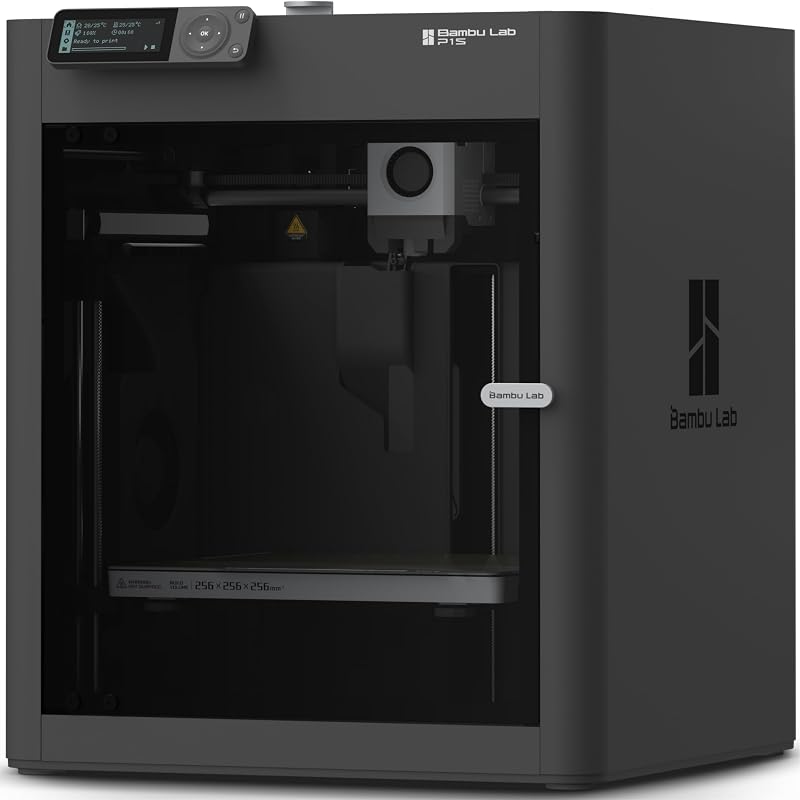
Beginner-Friendly Ecosystem with MakerWorld Model
The Beginner-Friendly Ecosystem with MakerWorld Model option features the standalone enclosed Bambu Lab P1S 3D printer, focusing on out-of-the-box ease of use, CoreXY precision, and direct ecosystem integration. Fabricators who want reliable, enclosed single-material or expandable multi-material printing without the sprawling footprint or heavy structural heft of an oversized open-frame platform should consider this setup for their primary workspace.
Final Verdict
When considering whether the purchase is justified, deciding if the is anycubic kobra 3 combo worth it comes down entirely to how much you value raw volume against spatial economy. This hardware excels at delivering immense physical throughput, offering a combination of 420x420x500mm volume, 600mm/s velocity, and multi-color feeding that few consumer-accessible platforms can match. For dedicated maker spaces and production studios tackling large-format display models or multi-color functional assemblies, the efficiency gains achieved by printing components whole are undeniable.
However, from the standpoint of portability, transit efficiency, and packing light, this platform is deeply compromised by design. Its 47-pound heft and sprawling bench requirements completely eliminate any potential for fluid transport or mobile studio integration. If your operations require a stationary titan capable of running wide-format filaments around the clock with AI oversight, the Anycubic Kobra 3 Combo is a powerhouse investment; if you need agility and spatial freedom, look toward compact CoreXY desktop alternatives.
FAQ
What are the primary anycubic kobra 3 combo specs to consider before purchase?
Key specifications include a massive 420x420x500mm build envelope, a peak travel velocity of 600mm/s with 10000mm/s² acceleration, and Kobra OS firmware. The physical footprint measures 29.5 inches deep by 32.25 inches wide by 7.25 inches high, and the machine has an overall net weight of 47 pounds. It features SG15 bearings, a dual-axis core motion system, and an AI-driven monitoring camera for anomaly detection.
How does the anycubic kobra 3 ace pro setup operate for multi-filament jobs?
The system links directly to the Anycubic ACE Pro unit to feed and manage up to four separate spools automatically during printing. For complex prints requiring broader palettes, you can link two ACE Pro units simultaneously to achieve seamless 8-color printing. The Kobra OS manages the filament retraction, purging, and feed cycles to ensure seamless transitions between colors.
What engineering materials can the machine print out of the box?
According to the official listing data, the system supports PLA, PLA+, TPU, ABS, ASA, PETG, Matte PLA, and Silk PLA. This wide range enables fabricators to produce flexible components using TPU, outdoor-grade UV-resistant parts using ASA, or high-detail visual display models using specialized Silk and Matte PLA variants.
How does the integrated AI monitoring protect large prints?
The onboard AI optical recognition system continuously tracks the deposition area in real time during bulk or single-object runs. If it detects print path failures, specifically the formation of unbonded “spaghetti” filament messes, it automatically pauses the print job and alerts the user. This stops the toolhead from continuing to extrude material onto a failed part, saving filament and protecting the hardware.
Is anycubic kobra 3 combo transportability realistic for field use?
Due to its substantial 47-pound weight, open gantry architecture, and wide physical perimeter, the machine is not designed for frequent transport. While it can be moved between permanent facilities if carefully disassembled and packed, using the anycubic kobra 3 combo for mobile workshop applications or field deployments is impractical compared to smaller, enclosed desktop 3D printers.


