Davis Vantage Vue In-Depth: Field Portability and Power
Read from the Amazon listing on 25 Oct 2026. Figures below are the seller’s; scores are out of 10, based on listed specifications and buyer feedback.
As Amazon Associates, we earn from qualifying purchases. This means we may receive a small commission at no extra cost to you if you click through and make a purchase.
The Davis Vantage Vue is an integrated meteorological sensor array engineered to capture continuous, hyper-local atmospheric data in demanding outdoor environments. Combining an anemometer, wind vane, self-emptying rain collector, temperature probe, and relative humidity sensor into a single aerodynamically shielded housing, this station serves as a trusted benchmark for real-time environmental measurement. For mobile researchers, off-grid operators, and weather observers who require scientific accuracy without delicate multi-piece hardware, the verdict is clear: it delivers exceptional data reliability, rapid telemetry updates, and unmatched off-grid autonomy in a remarkably durable chassis.
This self-contained hardware is ideal for expedition teams, field scientists, and remote property managers who prioritize swift mast deployment and self-sustaining solar operation. If you need dependable sensor telemetry over long distances without constant battery servicing schedules, this hardware is built for your gear kit. However, casual hobbyists seeking a cheap indoor display or observers who require independently mounted anemometers separated from their rain collectors should look elsewhere, as this listing provides the exterior sensor array without an indoor console.
Davis Vantage Vue at a Glance

- Our score
- 9.4/10
- Brand
- Davis Instruments
- Amazon code
- B00481TX32
Figures above are read from the Amazon product page, not measured here.
- Product Name
- Davis Vantage Vue
- Included Sensor Component
- Davis Instruments 6357 Wireless Sensor Suite
- Primary Power System
- Solar panel with onboard supercapacitor energy storage
- Auxiliary Backup Power
- One 3V lithium metal battery (included)
- Wireless Transmission Range
- Up to 1,000 feet (300 meters) line of sight
- Wind Velocity Tracking Range
- 2 mph to 200 mph (wind-tunnel tested to 180 mph)
- Wind Speed Sampling Frequency
- Updates every 2.5 seconds
- Rain Gauge Precision
- 0.01 inches (0.2 mm) self-emptying tipping spoon
- Operating Temperature Window
- -40°F to +150°F (-40°C to +65°C)
- Physical Dimensions
- 7.25 inches D x 17.5 inches W x 15.25 inches H
Field Power and Autonomous Off-Grid Operation
Listed spec Primary Power System Solar panel with onboard supercapacitor energy storage
Operating scientific gear in remote settings requires dependable electrical independence, and the davis vantage vue solar power architecture stands out as one of the most resilient systems engineered for exterior hardware. Rather than relying entirely on disposable alkaline cells that suffer from voltage sag during freezing temperatures, the system utilizes a front-facing solar panel linked directly to an onboard supercapacitor. Sunlight energizes the sensor cluster by day while simultaneously topping off the capacitor. Once darkness falls, the supercapacitor discharges smoothly to sustain continuous sensor sampling and radio broadcasts throughout the night, making a davis vantage vue off grid setup completely viable.
During extended stretches of dense cloud cover, heavy snow accumulation, or protracted winter storms, a secondary lithium cell automatically bridges the energy gap. Because the primary day-to-night workload is carried by the solar-supercapacitor circuit, the real-world davis instruments weather station battery life can span multiple seasons without requiring a physical swap. For off-grid remote teams running support hardware from portable stations such as the delta 3 max, operating a weather station that draws zero wattage from camp generator banks is a massive logistical benefit.
The absence of external power leads or modular interconnect cables also protects the electronic enclosure against common field failures. Traditional systems that tether separate solar panels or external battery boxes to their sensors introduce fragile wire runs that invite rodent chewing, ultraviolet degradation, and water intrusion at connection points. The Vantage Vue encloses its entire power loop within the core housing, allowing field teams to hoist the unit atop a mast and leave it operational without ongoing maintenance.
Sensor Precision and High-Frequency Update Rates
Listed spec Included Sensor Component Davis Instruments 6357 Wireless Sensor Suite
At the heart of the davis vantage vue 6357 sensor suite is a comprehensive instrument package calibrated to balance professional data accuracy with mechanical resilience. The anemometer assembly registers wind speeds starting at a gentle 2 mph breeze up to 200 mph gale forces, supported by documented wind-tunnel testing up to 180 mph. Wind data packets broadcast every 2.5 seconds, providing immediate notification of squalls, gust fronts, and turbulent wind shears. This rapid reporting frequency is invaluable for flight line safety, maritime monitoring, and wildland fire tracking.
Liquid precipitation is measured through an internal self-emptying tipping spoon mechanism calibrated to 0.01-inch (0.2 mm) increments. Unlike conventional flat-bottomed tipping buckets that can splash out during heavy cloudbursts or collect standing water, the tipping spoon design ensures rapid drainage and high repeatability across varying rainfall intensities. Temperature and relative humidity readings update on a steady 10-second cadence, protected beneath an integrated multi-plate radiation shield that mitigates solar thermal gain while allowing ambient breezes to circulate freely.
When compared against entry-level residential arrays like the accurite 5 in 1 weather station, the professional sampling rates and calibrated sensor tolerances of the Davis platform place it in an entirely different operational category. The rigorous davis vantage vue specs ensure that temperature tracking remains accurate within 1.8 degrees Fahrenheit across typical operating bands, delivering scientific-grade consistency for field research bases and serious storm spotters.
Wireless Range and Robust RF Telemetry
Listed spec Wireless Transmission Range Up to 1,000 feet (300 meters) line of sight
Remote research camps and observation posts frequently require placing the atmospheric sensors hundreds of feet away from living quarters or mobile work trailers to avoid structural wind shadows. The davis vantage vue wireless range provides up to 1,000 feet (300 meters) of line-of-sight signal transmission. This broad transmission bubble gives observers the freedom to install the mast on the highest ridgeline, clearing tree lines and vehicle obstructions while maintaining steady telemetry down at basecamp.
To ensure packet delivery through interference, Davis implements frequency-hopping spread-spectrum radio transmission. The onboard transmitter hops dynamically across multiple frequencies rather than broadcasting on a single static RF band. If localized radio noise or physical landscape obstacles interrupt a specific frequency, the telemetry packet simply transmits across the next open channel. This RF hardening is particularly vital in active field camps where satellite terminals, two-way radios, and high-capacity portable generators like the delta pro max operate in close proximity.
The transmitter operates at an internal frequency standard listed at 2.5 hertz to handle high-speed data delivery without swamping bandwidth. Observers should keep in mind that this listing provides the self-contained exterior sensor suite only. Capturing, displaying, and logging the incoming radio packets requires a compatible Davis receiving console, Envoy, or wireless data gateway.
Chassis Durability and Mobile Field Packability
Listed spec Physical Dimensions 7.25 inches D x 17.5 inches W x 15.25 inches H
The structural housing of the davis vantage vue weather station reflects deliberate engineering aimed at long-term outdoor survival. Measuring 7.25 inches deep, 17.5 inches wide, and 15.25 inches high, the entire cluster forms a compact, aerodynamic unit constructed from high-grade UV-resistant and corrosion-proof plastics. The materials resist yellowing, micro-cracking, and structural fatigue under punishing desert sun or coastal salt spray. Furthermore, the sensitive internal circuit boards are potted and over-molded, forming an impervious moisture barrier against humidity and condensation.
For travelers evaluating the davis vantage vue for field use, this consolidated form factor solves the primary headaches of portable deployment. Instead of disassembling individual anemometer arms, detached solar collectors, and delicate wiring harnesses into separate protective cases, the entire Vantage Vue packs as a single rigid module into transport trunks. A built-in bubble level sits right beside the mounting collar, enabling rapid visual alignment on temporary tripods, antenna masts, or fence posts without requiring extra leveling tools.
The only operational trade-off of this unified form factor is the fixed physical proximity between instruments. Professional meteorological siting standards recommend measuring wind at ten meters and ambient temperature at two meters above ground. With a combined sensor suite, users must compromise on a single mast height that balances clear wind exposure against practical rain gauge cleaning accessibility. However, for mobile bases requiring swift setup and tear-down, that structural compromise is easily outweighed by convenience.
Davis Vantage Vue Pros and Cons
Pros
- Solar panel with night supercapacitor energy storage
- Rapid 2.5-second wind speed telemetry updates
- Wind-tunnel tested durability up to 180 mph
- 1,000-foot frequency-hopping spread-spectrum wireless range
- Potted and moisture-shielded internal electronics
Cons
- Console display not included in this package
- Mounting pole must be purchased separately
- Integrated chassis prevents separate sensor height positioning
Who Should Buy the Davis Vantage Vue
Selecting the right meteorological instrument hinges on balancing measurement accuracy, deployment speed, and equipment longevity against overall operational needs.
Buy It If
- You need a durable, self-contained sensor cluster capable of off-grid solar operation without frequent battery swaps.
- Your tracking duties require real-time 2.5-second wind updates and a chassis tested to survive severe gusts up to 180 mph.
- You travel between field sites and want an all-in-one sensor body with an integrated bubble level for rapid mast leveling.
- You already own a compatible Davis receiving console or data logger and need to replace or expand an outdoor sensor suite.
Skip It If
- You need a complete ready-to-use package that includes an indoor desktop LCD display in the box.
- You require separate, isolated installation points for your wind cups and your rainfall collector to meet strict multi-level siting protocols.
- You only require basic household temperature checks and do not need commercial-grade potted electronics or spread-spectrum radio.
Davis Vantage Vue Alternatives Worth a Look
Depending on whether your immediate priority is direct smartphone connectivity, basic living space climate tracking, or critical severe weather broadcast alerts, several distinct alternatives offer specialized functionality.

With Wi-Fi Remote Monitoring
The With Wi-Fi Remote Monitoring station is tailored for property owners who want direct home Wi-Fi connectivity and cloud dashboard integration straight out of the box. While it may not feature the same industrial potting and long-distance spread-spectrum radio resilience found on Davis hardware, it offers an appealing all-in-one consumer setup for individuals who prioritize live mobile app updates without buying external gateway hardware.

Color Display Digital Weather Thermometer
For recreational vehicle travelers and road-trippers who only need fundamental indoor and outdoor thermal readings, the Color Display Digital Weather Thermometer provides an accessible, compact display system. Featuring an atomic clock, barometric pressure tracking, and a bright indoor screen, it serves living quarter needs well without the logistical demands of a full outdoor anemometer mast.
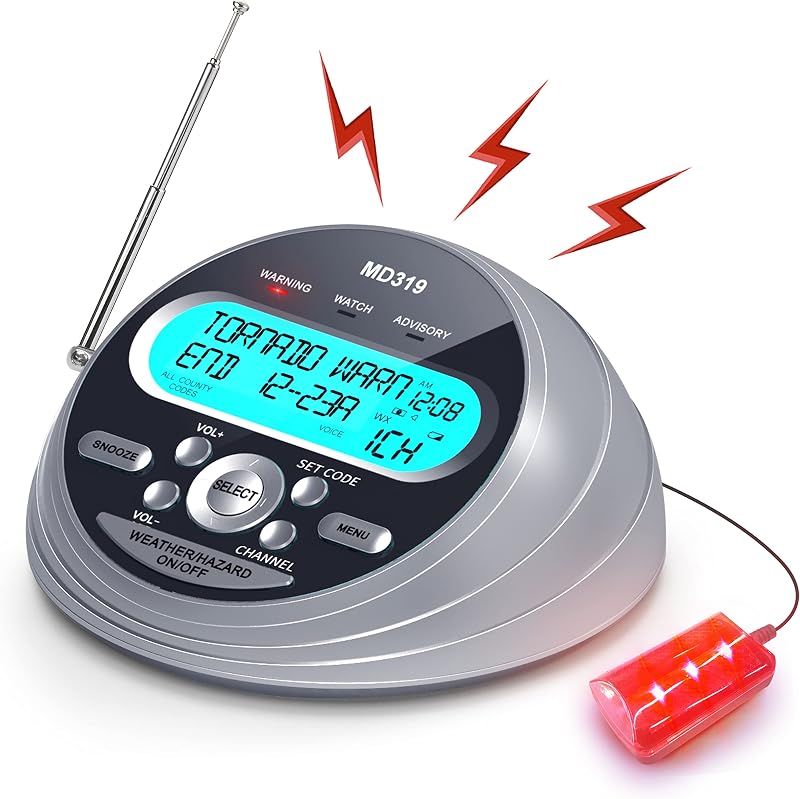
S.A.M.E Localized Programming,External Antenna,Warning Light,Battery
When human safety and immediate severe weather alarms are the sole operational objective, the S.A.M.E Localized Programming,External Antenna,Warning Light,Battery emergency radio fulfills a dedicated alert role. Designed with localized county coding, an external antenna, emergency battery backup, and dedicated warning lights, it alerts camp personnel to approaching tornadic activity and dangerous squalls, making it a critical safety companion even though it does not gather local meteorological data.
Final Verdict
When determining is davis vantage vue worth it, the answer centers on how much you value long-term structural reliability and measurement integrity in harsh environments. By combining potted moisture-sealed electronics, a rapid 2.5-second wind telemetry loop, and an autonomous solar-supercapacitor power system into a unified aerodynamic frame, this station avoids the common failure points of cheaper consumer weather instruments. It operates reliably through blistering heat, freezing moisture, and gale-force winds without demanding regular maintenance.
While buyers must plan ahead for a mounting pole and an indoor Davis console or data logger, the engineering quality of the 6357 sensor suite remains exceptional. For field scientists, storm observers, and remote base operators who demand scientific data consistency wherever their work takes them, the Davis Vantage Vue represents an outstanding field-ready investment.
FAQ
Does the Davis Vantage Vue package include an indoor display screen?
No, this specific listing contains the Davis Instruments 6357 Vantage Vue Wireless Sensor Suite and mounting hardware only. An indoor receiving console or compatible Davis gateway must be purchased separately to receive and view the sensor data.
How does the solar supercapacitor system operate through the night?
The integrated solar panel powers the sensor cluster during daylight while charging an internal supercapacitor. When night falls, the supercapacitor discharges stored energy to run the sensors until sunrise, with an onboard lithium metal battery serving as an automatic backup during prolonged cloudy periods.
What is the maximum wind speed the Vantage Vue can measure?
The sensor suite measures wind speeds from 2 mph up to 200 mph (3 km/h to 322 km/h) and has been structurally wind-tunnel tested to withstand severe winds up to 180 mph (290 km/h).
Can the wind cups be detached and mounted higher than the rain gauge?
No, the Vantage Vue features an integrated, single-piece housing where the anemometer, wind vane, tipping spoon rain gauge, and temperature-humidity sensors are permanently unified onto one structural frame.
Is a mounting pole included with the hardware?
No, while the box includes mounting U-bolts and hardware designed to secure the sensor suite to a mast, the listing specifies that the mounting pole itself is sold separately.


