TP-Link Archer AX10 Router Review: Lightweight Wi-Fi 6 for Traveling Creators
Read from the Amazon listing on 22 Sep 2026. Figures below are the seller’s; the score is the buyers’.
As Amazon Associates, we earn from qualifying purchases. This means we may receive a small commission at no extra cost to you if you click through and make a purchase.
The TP-Link Archer AX10 is an entry-level dual-band Wi-Fi 6 router designed around a 900MHz dual-core processor, four gigabit LAN ports, and an AX1500 theoretical throughput ceiling to handle modern multi-device data demands. For traveling creators, field video editors, and mobile production crews, this lightweight unit functions as an accessible, standalone networking station that creates an isolated local network wherever wall power is available. It delivers consistent Wi-Fi 6 efficiencies, beamforming signal directivity, and four reliable physical connections without adding substantial weight to an equipment kit.
This router suits traveling digital creators, freelance photographers, and remote videographers who establish temporary production offices in rental houses, hotel suites, or client studios and need private local offloading speeds far superior to congested public networks. However, production workflows handling massive multi-camera RAW video streams that demand multi-gigabit Ethernet connections, direct-attached USB network drives, or ultra-compact pocket routers powered by external battery banks will find its desktop form factor, fixed antennas, and standard gigabit ceiling restrictive.
TP-Link Archer AX10 at a Glance

- Buyer score
- 4.9 / 5 on Amazon
- Brand
- TP-Link
- Amazon code
- B07ZSDR49S
Figures above are read from the Amazon product page, not measured here.
- Wi-Fi Generation
- Wi-Fi 6 (802.11ax)
- Wireless Compatibility
- 802.11ax, 802.11ac, 802.11n, 802.11g, 802.11b
- Maximum Speed Ceiling
- AX1500 (1201 Mbps on 5 GHz + 300 Mbps on 2.4 GHz)
- Processor
- 900MHz Dual-Core CPU
- Ethernet Ports
- 5 Total (1 Gigabit WAN + 4 Gigabit LAN)
- Antenna Configuration
- 4 Fixed External Antennas
- Wireless Technologies
- OFDMA, MU-MIMO, 1024-QAM, Beamforming
- Operational Modes
- Router Mode, Access Point Mode
- Security Protocols
- WPA-PSK, WPA2, WPA3
- Operating Voltage
- 100–240 Volts AC
Wi-Fi 6 Wireless Speed and Local Offload Performance
Listed spec Wireless Compatibility 802.11ax, 802.11ac, 802.11n, 802.11g, 802.11b
Evaluating the tp-link archer ax10 wifi 6 speed reveals an architecture engineered for steady, contemporary data transfers rather than excessive multi-gigabit throughput. The router broadcasts across two separate bands, delivering up to 1201 Mbps on the modern 5 GHz 802.11ax frequency and up to 300 Mbps on the legacy 2.4 GHz 802.11n band. For mobile editors synchronizing proxy files between an editing laptop and a field tablet, the 5 GHz band provides responsive, low-latency performance that minimizes waiting times during localized transfers.
A critical technical asset of the platform is its implementation of 1024-QAM modulation alongside an increased symbol rate. Compared to older Wi-Fi 5 protocols, this technology packs more data into each transmission signal, allowing compatible modern laptops, tablets, and smartphones to achieve true gigabit-tier speeds over the air. When transmitting project timelines, image galleries, and compressed daily footage within the same room, users can experience wireless data rates that rival standard wired Ethernet cables. Editors curious about how baseline Wi-Fi 6 speeds compare to wider multi-band platforms can review our analysis of the TP-Link Archer BE550 to weigh generational upgrades.
Equally important for production sets is the archer ax10 ofdma performance. Orthogonal Frequency Division Multiple Access splits single wireless channels into multiple smaller resource units, enabling the router to communicate simultaneously with multiple client devices on the same frequency band instead of forcing each device to wait in an alternating transmission queue. Combined with multi-user MIMO (MU-MIMO) capability, the unit effortlessly coordinates simultaneous network calls from laptops, media ingest stations, field monitors, and personal smartphones without introducing crippling throughput drop-offs or network jitter.
Gigabit Port Layout and Wired Workflow Efficiency
Listed spec Ethernet Ports 5 Total (1 Gigabit WAN + 4 Gigabit LAN)
Wireless convenience aside, physical reliability remains the backbone of serious video editing workflows, and the archer ax10 gigabit ports provide an essential wired foundation. The unit features five total physical interfaces: one dedicated gigabit WAN port for modem or venue internet uplinks, and four dedicated 10/100/1000 Mbps gigabit LAN ports. This physical layout allows creators to construct a compact, isolated local area network (LAN) inside any temporary editing room without needing an auxiliary network switch.
In a mobile editing setup, these four LAN ports accommodate an entire multi-device workstation. An ingest technician can connect an editing workstation, a dedicated Network Attached Storage (NAS) unit, a client viewing monitor, and an auxiliary laptop simultaneously. Because the physical ports negotiate at full gigabit speeds, direct file transfers between hardwired devices achieve standard theoretical saturation rates of approximately 125 megabytes per second, ensuring smooth multi-stream ProRes proxy playback and sustained raw image transfers across the local subnet.
The primary constraint of the physical layout is the absence of multi-gigabit capabilities or direct drive sharing. The listing specifies 10/100/1000 Mbps bandwidth on its LAN interfaces, meaning high-end creative teams utilizing multi-gigabit storage arrays will find their physical transfer rates bottlenecked at standard gigabit ceilings. Those requiring multi-gigabit pipelines may want to compare configurations like the TP-Link BE5000 for higher wired throughput. Furthermore, the product data does not list an onboard USB port, meaning local storage must connect via independent network-attached drives or computer host sharing rather than plugging a portable external drive straight into the router.
Hardware Architecture and Travel Packing Feasibility
When assessing the tp-link archer ax10 for travel, physical packing dimensions, antenna construction, and internal hardware stability define its real-world viability. The core computing power stems from a dedicated 900MHz dual-core processor operating on a specialized Linux platform. This dual-core engine efficiently distributes multiple simultaneous data streams across the wireless and wired pipelines, preventing packet dropouts and computational slowdowns when large batch file syncs occur during active client reviews.
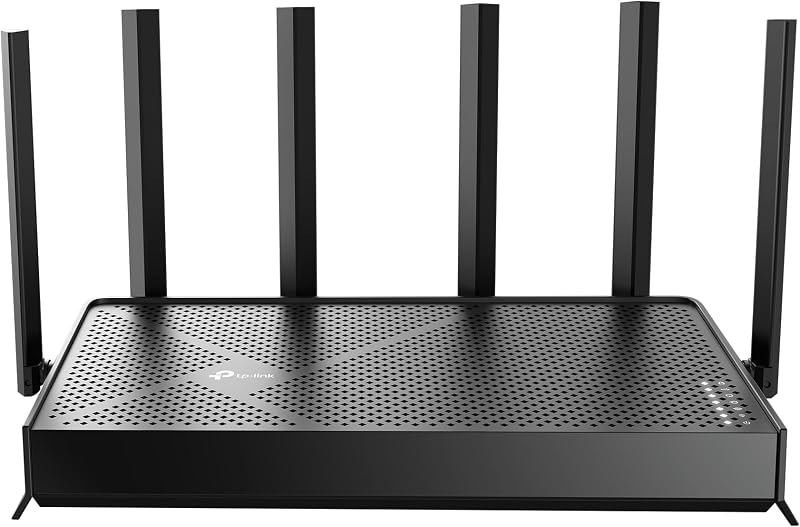
Physically, the router utilizes four fixed external antennas arrayed across the rear and sides of the plastic housing. Because these antennas are fixed rather than detachable, travelers cannot simply unscrew them to minimize volume inside tight camera bags or compact backpacks. However, the antennas hinge neatly to fold flat alongside the chassis body. Packed inside a padded gear tote, camera case organizer, or pelican divider, the router maintains a flat profile that takes up negligible vertical depth in a mobile equipment kit.
Power logistics are equally crucial for creators packing light across international borders. The technical specifications indicate a broad operating voltage range of 100 to 240 volts AC. This universal voltage compatibility means traveling crews can deploy the router across European, Asian, and American electrical grids using passive plug shape adapters without purchasing heavy step-down voltage transformers. It is vital to note that the product data outlines standard AC electrical operation; the listing does not specify USB-C powering or internal battery operation, meaning users must plan for a standard wall outlet at their editing base.
Setup Experience and Network Management Modes
Listed spec Wireless Technologies OFDMA, MU-MIMO, 1024-QAM, Beamforming
The practical value of tp-link archer ax10 portable editing setups depends heavily on how rapidly the hardware can be brought online in an unfamiliar environment. The tp-link archer ax10 setup is conducted using either a dedicated smartphone application or an intuitive Linux-based web management utility. Initial network configuration requires only connecting power, following guided app prompts to establish unique SSIDs, and setting strong network passwords. Hardware WPS integration simplifies one-touch pairing for wireless production accessories like wireless slate devices or remote printers.
For traveling editors, the inclusion of a native tp-link archer ax10 access point mode is a significant workflow asset. When entering a shared studio space, coworking office, or hotel room that already provides an active, upstream Ethernet connection, switching the router to Access Point Mode disables its internal DHCP server routing functions while maintaining full Wi-Fi 6 wireless broadcasts. This eliminates complex double-NAT issues and allows creative devices to communicate freely with local studio printers or server infrastructure while enjoying isolated, beamforming-focused Wi-Fi 6 speeds inside the immediate work area.
Network security and traffic control features are surprisingly robust on this entry-level platform. The router supports modern WPA3 encryption alongside WPA2 and WPA-PSK protocols, ensuring client files and confidential footage remain protected against unauthorized intrusion on shared physical premises. Integrated Quality of Service (QoS) tools allow editors to prioritize transmission packets originating from an editing workstation over peripheral smart devices, smart televisions, or gaming consoles. Users interested in expandability will also appreciate that the router functions within TP-Link OneMesh ecosystems, similar to the mesh capabilities explored in our review of the TP-Link AX1800 Wi-Fi 6 router v4 (Archer AX21).
TP-Link Archer AX10 Pros and Cons
Pros
- Dual-band Wi-Fi 6 speeds up to 1201 Mbps
- Four gigabit LAN ports for wired workstations
- OFDMA and MU-MIMO support for multi-device efficiency
- Universal 100 to 240 volt power support
- Dedicated Access Point Mode for hotel network integration
- Advanced WPA3 wireless security encryption
Cons
- Four fixed external antennas do not detach
- No integrated USB port for direct network storage
- Lacks multi-gigabit wired networking ports
Who Should Buy the TP-Link Archer AX10
Buy It If
- You need a dedicated, lightweight Wi-Fi 6 travel router to establish an independent local offload network in rental suites and hotel rooms.
- Your multi-device editing desk benefits from four dedicated gigabit LAN ports for hardwired storage, laptop docks, and video workstations.
- You want a simple setup offering a dedicated Access Point Mode, OneMesh expandability, and WPA3 security for client data protection.
- You travel internationally and require universal 100 to 240 volt AC power compatibility out of the box.
Skip It If
- You require an ultra-compact pocket router capable of operating on mobile USB-C power banks or internal batteries.
- Your production workflow demands 2.5GbE or 10GbE network interfaces to transfer uncompressed multi-stream RAW video without bottlenecking.
- You need an integrated USB port directly on the router chassis to create instant network-attached storage using portable thumb drives.
TP-Link Archer AX10 Alternatives Worth a Look
While the Archer AX10 satisfies fundamental Wi-Fi 6 requirements, creative workflows vary widely in network density, wired speed demands, and packing constraints. Evaluating comparable alternative networking hardware ensures you select the correct hub for your specific field kit.

Reliable Performance
The Reliable Performance NETGEAR Nighthawk RS90 is a dual-band Wi-Fi 7 router engineered for high-performance networks, featuring up to 3.6 Gbps throughput, coverage for up to 2,000 square feet, and support for 50 simultaneous devices. Unlike the gigabit-only ports on the AX10, this model incorporates one 2.5G port alongside three standard Gigabit ports. Editors running higher-bandwidth networked storage who want future-proofed Wi-Fi 7 capabilities and multi-gigabit wired speed should pick this model over the AX10.
Dual 2.5Gbps Ports
The Dual 2.5Gbps Ports TP-Link BE6500 (BE400) router advances field capabilities with dual 2.5Gbps ports, a fast quad-core CPU, HomeShield network defense, and coverage reaching up to 2,400 square feet for 90 devices. Critically for traveling media crews, it incorporates a dedicated USB 3.0 port, allowing direct network sharing of portable hard drives without requiring a standalone NAS. Traveling production teams that need multi-gigabit interconnects and direct drive-sharing on location will find it far more versatile than the AX10.

ASUS RT-AX1800S Dual Band WiFi
The ASUS RT-AX1800S Dual Band WiFi router delivers an AX1800 Wi-Fi 6 framework with built-in VPN support, subscription-free network security, AiMesh multi-unit expandability, and comprehensive parental controls. Traveling creators who frequently connect their field hubs to untrusted public internet connections and require native, router-level VPN encryption tunnels to protect client assets will prefer this model over the AX10.
Final Verdict
When asking whether the tp-link archer ax10 worth it for mobile workflows, the answer depends entirely on your throughput needs and packing style. If your goal is to eliminate erratic hotel Wi-Fi and establish a secure, private Wi-Fi 6 bubble with four dependable gigabit LAN jacks, this hardware delivers exceptional value. The combination of a 900MHz dual-core processor, beamforming signal focusing, OFDMA scheduling, and modern WPA3 protection ensures that laptops, mobile ingest hubs, and viewing devices communicate efficiently without unnecessary packet lag or interference.
However, users must remain realistic regarding the tp-link archer ax10 specs and hardware trade-offs. The fixed external antenna structure demands intentional packing space, the lack of USB connectivity eliminates simple thumb-drive network sharing, and standard gigabit interfaces impose a strict transfer ceiling on high-bitrate media files. For freelance editors seeking an affordable, straightforward field router that sets up in minutes and handles proxy syncs reliably, the TP-Link Archer AX10 is a dependable asset to keep in your gear case.
FAQ
Can the TP-Link Archer AX10 run on battery power or a USB power bank during travel?
No, the product specifications list an operating voltage requirement of 100 to 240 volts AC. The listing does not specify USB-C power delivery or internal battery hardware, meaning the router must be connected to an electrical wall outlet or compatible generator at your field location.
How do you use the TP-Link Archer AX10 in a hotel room?
To use the router in a lodging space, plug the power supply into a wall outlet and connect an Ethernet cable from the hotel room wall jack to the router WAN port. If you want to bypass routing conflicts, use the TP-Link Tether app or web interface to switch the unit to Access Point Mode, creating an isolated, private Wi-Fi 6 network for all your personal devices.
Does the TP-Link Archer AX10 have a USB port for sharing external hard drives?
The manufacturer listing does not specify any onboard USB ports for the Archer AX10. Local file transfers must take place across the four gigabit Ethernet LAN ports or over the Wi-Fi 6 wireless bands using a dedicated NAS or host-computer shared directory.
Are the antennas on the TP-Link Archer AX10 removable for easier packing?
The four high-gain external antennas are permanently fixed to the chassis housing and cannot be unscrewed or detached. However, they can be folded flat alongside the router body to create a relatively thin profile suitable for padded travel cases.
What devices can connect to the TP-Link Archer AX10?
The router supports standard Wi-Fi devices across all generations, including 802.11ax, 802.11ac, 802.11n, 802.11g, and 802.11b standards. Compatible client devices listed include personal computers, laptops, smartphones, gaming consoles, tablets, smart televisions, printers, security cameras, and smart thermostats.


