Westinghouse WGen7500DFc Review: Heavy-Duty Field Power Evaluated
Read from the Amazon listing on 4 Nov 2026. Figures below are the seller’s; scores are out of 10, based on listed specifications and buyer feedback.
As Amazon Associates, we earn from qualifying purchases. This means we may receive a small commission at no extra cost to you if you click through and make a purchase.
The Westinghouse WGen7500DFc is a dual-fuel open-frame generator built to deliver commercial-grade electrical output in locations where utility infrastructure does not exist. Generating 7,500 running watts and 9,500 peak watts on gasoline, this machine serves as a heavy-duty energy hub capable of energizing high-draw equipment arrays, battery recharge banks, and mobile command centers simultaneously. For travelers, field crews, and remote operators who typically prioritize packability, adopting a unit of this scale represents a conscious pivot: trading featherweight minimalism for uncompromised, continuous high-amperage output.
This generator suits mobile video production crews, overland expedition basecamps, disaster response teams, and remote work sites that demand reliable multi-circuit electricity across long work shifts. If your off-grid operations rely on running power-hungry halogen lighting rigs, heavy power tools, air conditioning units, or high-capacity drone charging stations, its massive capacity proves indispensable. Conversely, casual solo campers, ultralight van dwellers, and weekend car travelers should steer clear, as the unit’s mechanical footprint and combustion engine logistics will quickly overwhelm modest travel setups.
Westinghouse WGen7500DFc at a Glance

- Our score
- 8.8/10
- Brand
- Westinghouse
- Amazon code
- B099KPDJBD
Figures above are read from the Amazon product page, not measured here.
- Peak / Starting Wattage
- 9,500 Watts (Gasoline) / 8,550 Watts (Propane)
- Running / Rated Wattage
- 7,500 Watts (Gasoline) / 6,750 Watts (Propane)
- Engine Displacement
- 420cc 4-Stroke OHV Westinghouse Engine
- Fuel Source
- Dual Fuel (Gasoline and Liquefied Petroleum Gas)
- Fuel Tank Volume
- 6.6 Gallons (25 Liters) with Built-In Fuel Gauge
- Rated Gasoline Runtime
- Up to 11 Hours
- Starting Mechanism
- Electric Push-Button with Wireless Remote Key Fob
- Outlets
- Two GFCI 5-20R 120V Duplex, One L14-30R 120/240V Twist-Lock (7 Outlets Total)
- Safety Features
- Automatic Low Oil Shutdown, Carbon Monoxide (CO) Sensor, Overload Protection
- Warranty Coverage
- 3-Year Limited Service, Labor, and Parts Coverage
Power Output and Dual-Fuel Versatility in the Field
Listed spec Fuel Source Dual Fuel (Gasoline and Liquefied Petroleum Gas)
Evaluating the core capabilities of the westinghouse 9500 generator begins with its raw electrical output. Operating on standard unleaded gasoline, the machine yields 7,500 continuous running watts alongside a surge ceiling of 9,500 peak watts. Switching the fuel supply over to liquefied petroleum gas (propane) drops output slightly to 6,750 running watts and 8,550 peak watts, an expected mechanical trade-off due to the lower energy density of LPG. These westinghouse wgen7500dfc specs mean that whether you are feeding power through standard 120-volt lines or tapping into the heavy 240-volt circuit, the unit effortlessly absorbs the high inductive starting surges of large electric motors, compressors, and climate control units.
For technical crews utilizing a westinghouse 9500 generator for mobile production, dual-fuel capability provides immense operational flexibility. Carrying five-gallon gasoline jugs in an enclosed vehicle presents safety hazards and pungent fumes that can spoil expensive production gear or living quarters. Propane cylinders, by comparison, can be safely transported and stored for indefinite periods without gumming up the internal carburetor jets during extended storage between projects. When filming or working in environmentally sensitive outposts where fuel delivery is unpredictable, having the ability to switch between pump gas and standard barbecue-style propane tanks ensures your electrical hub never runs dry.
While open-frame generators of this capacity deliver immense power, buyers must weigh that output against their actual energy requirements. Smaller, specialized units like the erayak 4500w portable inverter generator cater to moderate energy draws with tighter portability footprints. However, if your remote setup requires running high-draw catering appliances, industrial air filtration, multi-kilowatt HMI lighting arrays, and heavy-duty workstation laptops simultaneously, the extra headroom supplied by this 420cc powerhouse prevents nuisance breaker trips and keeps the entire site functioning smoothly.
Runtime Performance and Fuel Management
Listed spec Rated Gasoline Runtime Up to 11 Hours
Fuel endurance directly dictates how effectively a remote camp operates through the night. The westinghouse 9500 generator runtime is anchored by a generous 6.6-gallon (25-liter) steel fuel tank that includes an integrated, mechanical fuel level gauge on top. Westinghouse rates this setup for up to 11 hours of runtime on a full tank of gasoline under moderate loads. This endurance allows field teams to power through a standard 10-hour work shift or maintain critical overnight operations—such as basecamp refrigeration, trailer climate control, and equipment battery recharging—without requiring a midnight refueling excursion in inclement weather.
When running on propane, the westinghouse 9500 dual fuel runtime depends heavily on the size of the connected tank. While the product listing does not specify exact runtime figures for standard 20-pound propane cylinders, LPG combustion is known to deliver clean, stable operation across varying ambient temperatures. Liquid propane does not degrade over time, making it the superior fuel choice when staging equipment at remote field shelters that may sit unattended for weeks between deployments. The inclusion of Automatic Voltage Regulation (AVR) also ensures that engine speed fluctuations under shifting electrical loads do not cause wild voltage spikes, protecting your connected distribution boxes.
Fuel management is further streamlined by the digital hour meter mounted directly on the central control console. By recording real-time engine runtime, the meter eliminates guesswork, allowing field logistics managers to anticipate fuel consumption rates and plan fuel supply runs accurately. Because the fuel tank opening is wide and clearly visible from above, refueling from heavy Jerry cans in the field can be accomplished quickly, while the analog gauge gives immediate feedback to prevent accidental overfilling.
Portability, Control, and Remote Operations
Evaluating an open-frame generator from a travel and mobile gear perspective demands an honest look at physical logistics. The listing does not specify the exact dry weight or exterior dimensions for this model, but housing a 420cc 4-stroke overhead valve engine within a tubular steel protective cage means this is fundamentally a heavy piece of machinery. Solo operators cannot simply hoist this unit into the bed of a tall overland truck without ramps, a crane, or a second pair of hands. Mobility around the basecamp relies on its integrated frame structure, meaning transport over rocky, uneven field terrain requires planning and dedicated vehicle space.
Where this machine excels in field usability is its ignition architecture. Operating the westinghouse 9500 remote start system via the included wireless key fob allows users to engage the electric starter from inside a mobile studio trailer, tent, or vehicle cabin. Pairing push-button electric start with remote wireless ignition eliminates the fatigue of pulling a heavy recoil cord in freezing morning temperatures. For basecamps operating on strict quiet-hour schedules, being able to power down the generator remotely from up to dozens of feet away adds significant daily convenience.
Connection flexibility is another notable strength of the main panel. The unit provides two GFCI 5-20R 120V 20A household duplex outlets for general charging duties and light tools, alongside a heavy-duty L14-30R 120/240V 30A twist-lock outlet. All outlets are equipped with thick rubber protective covers to prevent dirt, dust, and moisture from compromising the electrical contacts when deployed outdoors. Furthermore, the L14-30R connection makes the westinghouse 9500 generator transfer switch ready, allowing seamless integration into mobile trailers equipped with standard 30-amp shore-power transfer switches or remote shelter electrical panels.
Durability, Safety Protections, and Maintenance Needs
Listed spec Safety Features Automatic Low Oil Shutdown, Carbon Monoxide (CO) Sensor, Overload Protection
Remote environments quickly expose structural weaknesses in poorly built field gear. The Westinghouse WGen7500DFc relies on an industrial-grade 420cc 4-stroke OHV engine built with a cast-iron cylinder sleeve. This internal sleeve reinforces the cylinder bore against thermal wear and friction during extended continuous runs in warm desert or humid mountain climates. Every generator is functionally tested at the factory before shipping, meaning buyers may notice a faint residual fuel or oil odor upon unboxing, but this confirms the mechanical integrity of the engine and electrical windings before it reaches your staging area.
Jobsite and remote campsite safety are addressed through several automated systems. Most prominent is the integrated carbon monoxide (CO) sensor, which continuously monitors ambient exhaust accumulation and automatically shuts down the engine if hazardous gas concentrations are detected near the unit. Complementing this are an automatic low-oil shutdown mechanism and built-in overload protection circuits. These automatic cutoffs safeguard the engine from catastrophic seizure if oil levels drop during a steep tilt or long run, while protecting connected cords from overheating due to excessive amp draws.
Routine westinghouse 9500 generator maintenance is supported by the accessories supplied in the shipping carton. Westinghouse includes a bottle of engine oil, an oil funnel, a dedicated tool kit, a 12-volt battery float charger, and an exhaustive user manual. The onboard digital hour meter tracks cumulative operational hours, providing the precise tracking needed to change oil, service the spark plug, and clean the air cleaner on schedule. For crews that also maintain sensitive interior devices, pairing this heavy-duty workhorse with a battery system like the bluetti elite 30 v2 portable power station allows the gas generator to handle the brutal heavy-lifting tasks while the silent battery bank powers sensitive audio monitors inside.
Westinghouse WGen7500DFc Pros and Cons
Pros
- Delivers up to 9500 peak watts
- Dual-fuel flexibility with gasoline and propane
- Convenient electric start with wireless key fob
- Automatic carbon monoxide sensor shutdown protection
- Transfer-switch-ready 120/240V 30A twist-lock outlet
- Generous 6.6-gallon fuel tank with gauge
Cons
- Substantial bulk requires dedicated transport planning
- Listing does not specify operational decibel levels
- Listing does not specify physical bare weight
Who Should Buy the Westinghouse WGen7500DFc
Buy It If
- You manage remote production sets, mobile workshops, or large field camps that require substantial, simultaneous electrical power across 120V and 240V circuits.
- You need the versatility of dual-fuel operation to run clean, shelf-stable propane alongside standard pump gasoline in distant locations.
- You want the convenience of remote key fob push-button ignition to start or stop your power supply from inside a vehicle or shelter.
- You require a transfer-switch-ready L14-30R twist-lock connection to power an expedition trailer or remote cabin electrical panel directly.
Skip It If
- You travel solo in a compact vehicle or minivan where hauling a heavy 420cc open-frame generator is physically impractical.
- Your power requirements are modest and best served by a silent, ultra-portable power pack such as the anker portable power station solix c300, 288wh lifepo4 battery, 300w (600w surge) solar generator, 1.
- You frequently operate in noise-restricted campgrounds that mandate enclosed inverter generators with documented low-decibel ratings.
Westinghouse WGen7500DFc Alternatives Worth a Look
If the massive power capacity and substantial footprint of this Westinghouse model do not align with your specific payload constraints, several alternative power solutions cater to different mobile priorities.
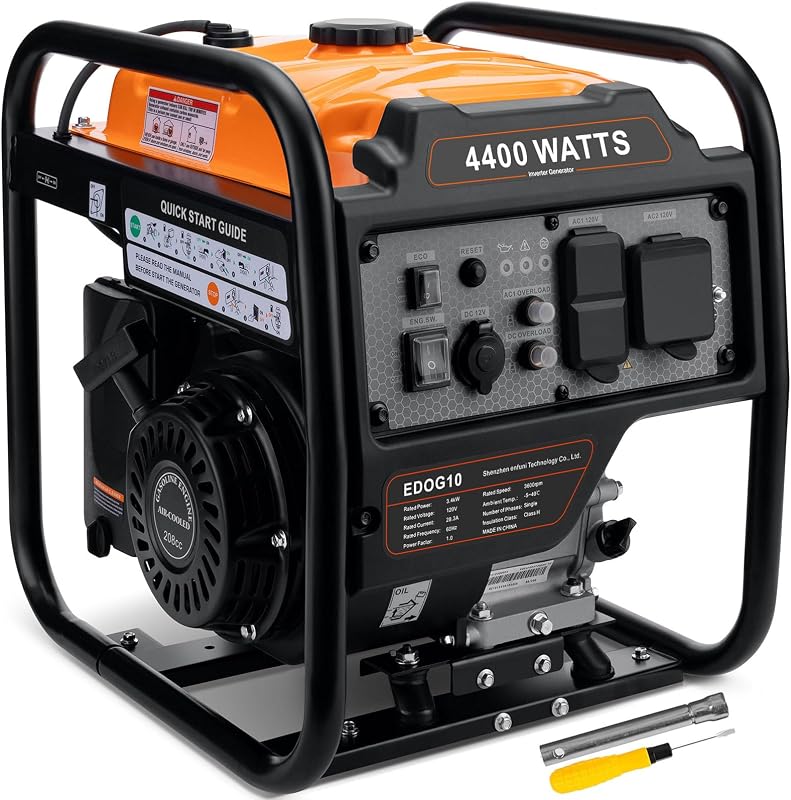
Oxseryn 4400-Watts Inverter Generator
The Oxseryn 4400-Watts Inverter Generator features an open-frame, gas-powered configuration rated for emergency home backup and RV use with an RV-ready 30A outlet. Delivering 4,400 peak watts, it provides roughly half the output of the Westinghouse unit, making it a compelling mid-tier compromise for mobile users who want substantial generator output with reduced overall mass. Users seeking a similar open-frame mid-range option might also evaluate the champion 4250 watt inverter generator for balanced field performance.

Jackery Explorer 300 Portable Power Station
Listed as a backup LiFePO4 battery solar generator for outdoors, camping, travel, hunting, and blackout situations, the Backup LiFePO4 Battery platform (Jackery Explorer 300) delivers 292Wh of zero-emission, silent portable energy. This device represents the exact opposite end of the power spectrum compared to the 9,500-watt Westinghouse machine. Field photographers, solo hikers, and tent campers should choose this compact power station when their energy demands are limited to keeping drone batteries, mirrorless cameras, and smartphones charged without dealing with fuel cans, engine exhaust, or heavy lifting.
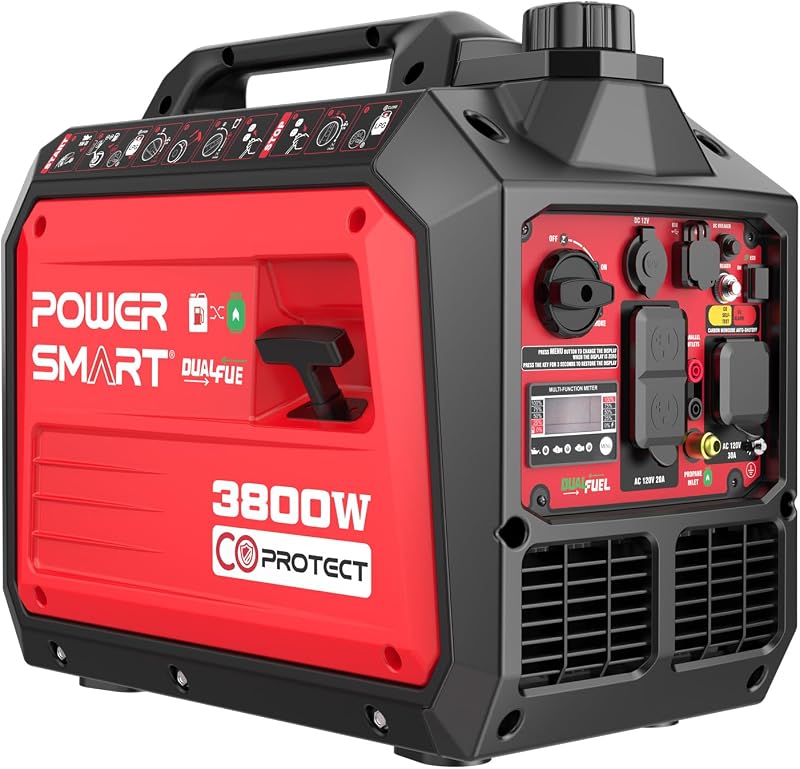
PowerSmart 3800 Watt Dual Fuel Inverter Generator
The 8H Run Time PowerSmart 3800-watt inverter generator provides an ultra-quiet operating profile below 59 dBA, clean electrical output with less than 3% total harmonic distortion (THD), an 8-hour run time, and parallel readiness. It operates on both gasoline and propane while featuring automatic CO protection. Mobile creators who record live field audio or operate in densely populated public campsites should pick this unit over the open-frame Westinghouse, as its enclosed inverter design prioritizes whisper-quiet operation and clean power for audio equipment.
Final Verdict
Deciding whether it is westinghouse generator 9500 worth it comes down to a clear assessment of your mobile power baseline. The Westinghouse WGen7500DFc does not pretend to be a lightweight, stow-and-go camping accessory. Instead, it is an uncompromising, industrial-grade power plant built to anchor heavy-duty operations. With 9,500 peak watts, an ultra-reliable 420cc cast-iron-sleeved engine, dual-fuel capability, and a generous 6.6-gallon fuel tank, it effortlessly outmuscles compact portable units to keep an entire remote basecamp or commercial mobile set fully functional.
If your travel style demands lightweight packing, silent running, or effortless one-person trunk loading, this open-frame generator will prove far too cumbersome. But if you have the vehicle payload capacity to transport it, and your off-grid survival, production schedule, or field projects rely on running major appliances and heavy gear without power interruptions, the Westinghouse WGen7500DFc stands as an exceptionally robust, dependable field asset.
FAQ
Can the Westinghouse WGen7500DFc run sensitive electronics directly?
The Westinghouse WGen7500DFc utilizes an Automatic Voltage Regulator (AVR) to maintain steady voltage across its outlets. However, because it is an open-frame traditional generator rather than a specialized digital inverter, operators powering high-end audio recording rigs, sensitive medical devices, or specialized broadcast gear often choose to route power through an intermediate battery station or line conditioner to guarantee ultra-clean sine-wave delivery.
How does the wireless remote key fob work in field conditions?
The generator is equipped with an electric start system powered by an internal 12-volt battery. The included wireless remote key fob pairs directly with the generator’s ignition module, allowing you to start or stop the 420cc engine from a distance without touching the physical control panel. A 12V battery charger is included in the box to keep the internal starting battery properly maintained between field outings.
What accessories are included in the box?
The Westinghouse WGen7500DFc ships with virtually everything needed to achieve plug-and-play operation straight from the carton. Inside, you will find the wireless remote start key fob, a 12V battery charger, a bottle of engine oil, a specialized oil funnel, a mechanical tool kit, and a comprehensive user manual. Minimal initial assembly is required before filling the fluids and initiating the first start.
How does the automatic carbon monoxide sensor function?
The generator features an integrated carbon monoxide (CO) sensor that continuously samples ambient air around the machine. If the sensor detects that exhaust gases are accumulating to unsafe levels—such as when the machine is operated too close to a trailer wall, enclosed awning, or open window—the system triggers an automatic engine shutdown to protect nearby personnel from carbon monoxide poisoning.
What are the primary differences between running gasoline and propane?
Gasoline yields maximum power from the engine, delivering 7,500 running watts and 9,500 peak watts, and draws from the built-in 6.6-gallon tank for up to 11 hours of runtime. Propane (LPG) delivers slightly lower electrical numbers—6,750 running watts and 8,550 peak watts—due to its combustion characteristics. However, propane burns cleaner, does not degrade or gum up internal engine parts during long storage periods, and eliminates the need to transport liquid fuel cans inside mobile expedition vehicles.