Bambu Lab P2S AMS Combo: Complete Speed, Footprint, and Workflow Breakdown
Read from the Amazon listing on 22 Sep 2026. Figures below are the seller’s; the score is the buyers’.
As Amazon Associates, we earn from qualifying purchases. This means we may receive a small commission at no extra cost to you if you click through and make a purchase.
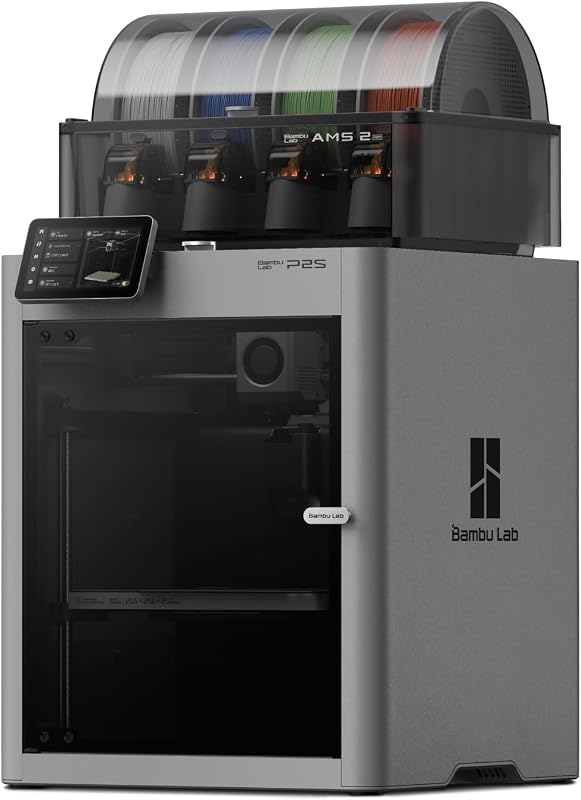
The Bambu Lab P2S AMS Combo is a production-grade desktop additive manufacturing station that pairs rapid CoreXY engineering with automated multi-material handling. By unifying high-speed precision hardware with the upgraded AMS 2 Pro module, this setup allows users to output complex multi-color designs, support structures, and engineering materials at print speeds reaching up to 600 mm/s. For creators, traveling technicians, and mobile design teams setting up on-location workshops, our research indicates this combo package serves as an uncompromising, turn-key fabrication hub capable of handling rigorous jobs right out of the crate.
This setup is engineered primarily for commercial prototypers, technical educators, and makers who demand automated calibration, reliable filament conditioning, and multi-color flexibility without losing time to manual bed leveling or extruder tuning. However, creators running lightweight, ultra-portable field kits or lone makers traveling between compact studio desks may find its substantial 46.3-pound bulk and rigid frame demanding to relocate on short notice. Those prioritizing ultra-light mobility and smaller footprints might prefer a more modular, open-frame design such as the bambulab a1 combo 3d printer instead.
Bambu Lab P2S AMS Combo at a Glance
- Buyer score
- 4.0 / 5 on Amazon
- Brand
- Bambulab
- Amazon code
- B0FT818HCH
Figures above are read from the Amazon product page, not measured here.
- Brand & Manufacturer
- BAMBULAB / Shenzhen Tuozhu Technology Co., Ltd
- Item Model Number
- PF004-U+SA007-AU
- Physical Dimensions
- 18 inches Deep x 22 inches Wide x 18 inches High
- Product Weight
- 46.3 pounds
- Maximum Print Speed
- Up to 600 mm/s
- Extrusion Technology
- PMSM Servo Extruder with Active Flowrate Compensation
- Multi-Color Module
- AMS 2 Pro with built-in filament drying up to 65 °C
- Thermal & Chamber Control
- Adaptive Airflow System with 50 °C chamber capability
- Air Filtration
- Integrated activated carbon filter
- Deployment & Setup
- Ready to print in 15 minutes with automatic calibration
Extrusion Technology and High-Speed Precision
Listed spec Extrusion Technology PMSM Servo Extruder with Active Flowrate Compensation
Velocity in desktop additive manufacturing frequently comes at the expense of surface finish and corner definition, but the engineering behind the Bambu Lab P2S platform is designed to counteract that compromise. Driven by a PMSM Servo Extruder, the system regulates filament deposition under high continuous acceleration, reaching print speeds of up to 600 mm/s. The integration of Active Flowrate Compensation measures and modulates internal nozzle pressure dynamically, preventing the corner swelling and under-extrusion gaps that typically plague high-speed CoreXY mechanics during rapid direction changes.
For mobile makers producing functional enclosures, jigs, or presentation prototypes under tight production deadlines, this consistency is essential. When producing parts across successive print runs in pop-up work environments, the quick-swap nozzles allow quick transitions between detailed geometry and structural components. Combined with automated calibration routines, the printer eliminates the need for manual dial indicators or sheet-of-paper leveling tests, ensuring that the first layer adheres cleanly on the first attempt without prolonged supervision.
The addition of AI failure detection introduces an extra layer of operational security for remote or multi-tasking workflows. While users manage secondary tasks or prepare other equipment in a mobile studio, the integrated vision system scans the build plate to identify print path deviations, layer shifts, or spaghetti errors before material is wasted. This automation transforms the unit into an autonomous production station, allowing operators to run extensive overnight jobs with confidence.
Multi-Material Management and the AMS 2 Pro System
Listed spec Multi-Color Module AMS 2 Pro with built-in filament drying up to 65 °C
The defining strength of this bundle rests in the inclusion of the AMS 2 Pro unit, which elevates the base hardware into a complete multi-color and multi-material system. According to the manufacturer documentation, the standalone P2S machine does not support multi-color printing on its own; investing in the combo configuration is mandatory to access multi-spool switching. For an in-depth breakdown of the standalone base machine’s mechanical limits, see our evaluation of the bambu lab p2s 3d printer.
Beyond color swapping, the AMS 2 Pro addresses a major pain point for mobile fabricators: ambient moisture. The unit integrates active filament drying capabilities operating at temperatures up to 65 °C, baking out humidity from hygroscopic filaments such as engineering polyamides, PETG, or standard PLA while they remain queued for printing. In portable pop-up environments like outdoor maker tents, temporary studio garages, or humid event spaces, filament degradation can ruin print runs within hours; the enclosed drying chamber keeps spools conditioned and ready to run.
The automated material routing system simplifies composite printing by handling dedicated support materials—such as soluble filaments or breakaway interfaces—alongside structural build filaments. This capability enables complex internal channels and overhang geometries that are difficult to clean manually. By switching materials automatically mid-print, the AMS 2 Pro allows creators to deliver finished multi-color parts without post-process masking, manual painting, or multi-part assembly.
Thermal Architecture and Filtration for Mobile Studios
Listed spec Thermal & Chamber Control Adaptive Airflow System with 50 °C chamber capability
Operating a 3D printer in temporary work environments, shared offices, or mobile studio vans requires careful thermal and air quality management. The Bambu Lab P2S addresses this challenge with an enclosed design featuring an Adaptive Airflow System. This mechanism regulates cooling and thermal containment automatically, routing cool air across fine bridges and overhangs to maintain crisp geometric edges or sealing the chamber to achieve a stable 50 °C environment tailored for warp-prone engineering plastics.
Thermal stability inside the chamber is critical when printing structural brackets or automotive fixtures away from a climate-controlled laboratory. Rapid temperature shifts caused by opened doors or mobile air conditioners can cause split layer lines or warping on broad structural bases. By sustaining an elevated internal chamber temperature, the P2S mitigates these internal stresses, ensuring high layer-to-layer cohesion throughout tall or bulky builds.
Because portable workspaces and pop-up classrooms often lack dedicated industrial fume extraction, air management is a primary safety consideration. The P2S incorporates a replaceable internal carbon filter designed to capture volatile organic compounds and particulate emissions during printing cycles. This filtration makes the printer safer and more comfortable to run in close quarters alongside workstations, presentation booths, and client meeting areas.
Footprint, Weight, and Mobile Studio Deployment
Listed spec Product Weight 46.3 pounds
Transporting professional fabrication tools between client locations or temporary event installations requires an honest assessment of spatial logistics. The Bambu Lab P2S AMS Combo measures 18 inches deep, 22 inches wide, and 18 inches high, presenting a substantial desktop presence that demands a sturdy, dedicated bench. At a combined shipping and operating weight of 46.3 pounds, this is an industrial-grade tool rather than a grab-and-go field device, making secure transport cases and two-person lifts practical necessities for traveling crews.
Where the system excels for traveling makers is in setup speed once on site. From opening the carton to running a verified benchmark print, the unit is ready to print in approximately 15 minutes. The combination of automated bed leveling, active resonance compensation, and automated flow calibration ensures that mechanical shifts endured during highway transit are corrected automatically without tedious manual realignment.
Control across remote and local networks is managed seamlessly via the manufacturer software pipeline. Operators can initiate and monitor jobs from a smartphone running Bambu Handy or a Windows 10 workstation running Bambu Studio. The platform connects directly with the MakerWorld ecosystem, giving mobile educators and technicians instant access to over one million 3D models that can be sliced, queued, and produced without complex CAD interventions on site.
Bambu Lab P2S AMS Combo Pros and Cons
Pros
- Prints at speeds up to 600 mm/s
- AMS 2 Pro includes 65 °C filament drying
- Active Flowrate Compensation maintains crisp corners
- Enclosed chamber with 50 °C thermal capability
- Quick 15-minute initial setup with auto calibration
- Integrated carbon filter for cleaner exhaust
Cons
- Substantial weight at 46.3 pounds
- Large physical footprint of 18 by 22 inches
- P2S requires combo unit for multi-color printing
Who Should Buy the Bambu Lab P2S AMS Combo
Buy It If
- You manage a mobile design studio, pop-up technical workshop, or on-location production rig that needs rapid 15-minute setup and verified 600 mm/s print speeds.
- Your projects rely heavily on multi-color presentation prototypes or hygroscopic technical filaments that require active 65 °C spool drying during production.
- You want automated production tools like AI defect scanning, quick-swap nozzles, and active flowrate compensation to reduce manual oversight.
- You operate your slicer workflows primarily on Windows 10 and want wireless mobile monitoring via smartphone apps.
Skip It If
- Your travel setup is constrained by strict carry-on weight limits or trunk space where a 46.3-pound, 18-by-22-inch enclosed station is impractical.
- You exclusively print basic single-color prototypes in PLA and have no need for multi-filament switching or internal drying hardware.
- You lack a sturdy, stable work surface capable of absorbing the vibration and kinetic forces generated by high-speed CoreXY directional shifts.
Bambu Lab P2S AMS Combo Alternatives Worth a Look
While the P2S AMS Combo provides an integrated, fully enclosed multi-material setup, exploring alternative machines helps determine whether other form factors or simpler toolchains better align with your production requirements and transit constraints.

FLASHFORGE Adventurer 5M 3D Printer
The FLASHFORGE Adventurer 5M 3D Printer features a CoreXY all-metal structure with a 220x220x220mm build volume, capable of matching high-speed printing up to 600 mm/s. It is equipped with fully automatic leveling and a 280 °C direct extruder utilizing a 3-second detachable nozzle system for quick tool changes.
Makers who want rapid extrusion rates and fast nozzle maintenance in a dedicated single-material CoreXY format—without the physical overhead and added bulk of an automated multi-spool dry box—should consider this option for streamlined transport.
Beginner-Friendly Ecosystem with MakerWorld Model
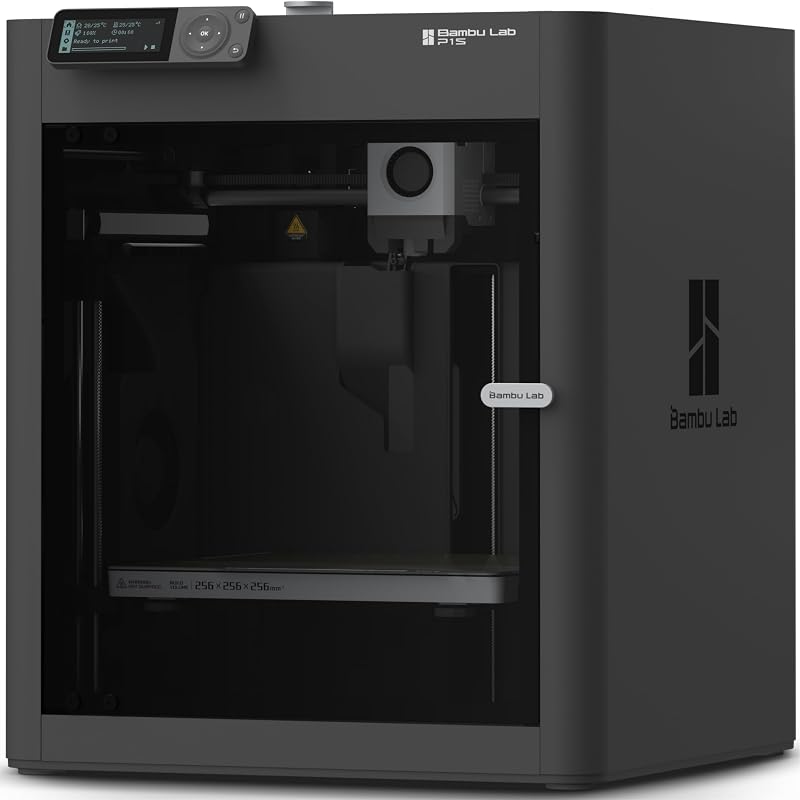
The Beginner-Friendly Ecosystem with MakerWorld Model listing highlights an enclosed CoreXY high-speed precision platform based on the Bambu Lab P1S architecture, complete with integration into the MakerWorld model repository for ready-to-use printing right out of the box.
Fabricators seeking the established reliability of an enclosed CoreXY machine with cloud-slicing integration who already possess external drying equipment or want to configure their multi-material hardware separately may find this standalone ecosystem layout more adaptable to their existing kits. Those weighing prior enclosed iterations can also review our guide to the bambu lab p1s combo 3d printer.

Dual-Color Printing
The Dual-Color Printing platform is an enclosed chamber FDM 3D printer featuring dual-color printing capabilities, a touchscreen display, and built-in Wi-Fi connectivity for networked workshop production.
Creators who specifically need two-color or two-material functional printing with direct on-chassis touchscreen controls, without the footprint of a separate four-spool overhead feeder assembly, should examine this enclosed alternative.
Final Verdict
The Bambu Lab P2S AMS Combo represents a cohesive, production-ready fabrication ecosystem that simplifies complex multi-material manufacturing. By uniting 600 mm/s print speeds, PMSM servo extrusion, and Active Flowrate Compensation with an enclosed 50 °C chamber and carbon filtration, it provides reliable part quality under demanding schedules. The AMS 2 Pro completes the package by solving the persistent problem of filament moisture through integrated 65 °C heating while executing smooth, multi-material layer transitions automatically.
While the machine’s 46.3-pound heft and sizeable physical footprint mean it cannot be treated as casual travel baggage, its rapid 15-minute setup and automated calibration make it uniquely qualified for mobile workshops, production trailers, and regional event deployments. For creators who need a dependable desktop factory that delivers commercial results with minimal manual intervention, the P2S AMS Combo stands out as a top-tier investment for stationary and semi-mobile studios alike.
FAQ
How fast does the Bambu Lab P2S AMS Combo print?
The printer achieves print speeds of up to 600 mm/s. Its PMSM Servo Extruder and Active Flowrate Compensation work together to maintain sharp corners and accurate surface finishes even while running at peak acceleration.
Can the Bambu Lab P2S print multi-color models without the AMS 2 Pro?
No, the listing specifies that the standalone P2S 3D printer does not support multi-color printing on its own. The AMS 2 Pro included in this Combo package is required to enable automated multi-color and multi-material printing workflows.
What operating systems and mobile devices are compatible with the printer?
The printer is compatible with smartphones via the Bambu Handy application for remote monitoring and model selection. Desktop slicing and printer management are handled through Bambu Studio on Windows 10 operating systems.
How does the AMS 2 Pro handle filament drying?
The AMS 2 Pro features built-in active filament drying capable of reaching temperatures up to 65 °C. This allows users to bake out moisture from sensitive or hygroscopic filaments directly inside the unit before and during active print jobs.
How long does the initial setup take for mobile deployments?
The manufacturer states that the P2S is ready to print in approximately 15 minutes. Automatic calibration routines, quick-swap nozzles, and AI failure detection handle the initial alignment tasks so users can begin printing with minimal manual prep.


