Creality Ender 3 V3 SE 3D Printer: On-the-Go Maker Assessment
Read from the Amazon listing on 22 Sep 2026. Figures below are the seller’s; the score is the buyers’.
As Amazon Associates, we earn from qualifying purchases. This means we may receive a small commission at no extra cost to you if you click through and make a purchase.
The Creality Ender 3 V3 SE is a compact, bedslinger-style desktop manufacturing machine built to remove the calibration headaches that historically plagued entry-level fabrication tools. Designed as a modernized iteration of classic hobbyist platforms, this machine combines automated surface detection, a dual-gear direct drive system, and an organized modular frame into a form factor suitable for temporary workspaces and pop-up creative labs. If you need a capable fabrication tool that produces functional prototypes without requiring hours of manual mechanical tuning, this printer represents a major leap forward in accessibility and baseline reliability.
For mobile makers, field technicians, and design educators who move between workspaces, this unit offers an attractive balance of rapid deployment and structural stability. However, creators who demand fully enclosed build volumes for high-temperature engineering filaments or those needing integrated multi-material feeds will find its open-gantry architecture limiting, and they should look toward enclosed CoreXY alternatives instead.
Creality Ender 3 V3 SE at a Glance

- Buyer score
- 4.9 / 5 on Amazon
- Brand
- Creality
- Amazon code
- B0F8J78BN1
Figures above are read from the Amazon product page, not measured here.
- Maximum Print Speed
- 250 mm/s (2500 mm/s² acceleration)
- Build Volume
- 8.66 x 8.66 x 9.84 inches
- Machine Dimensions
- 13.9 x 13.9 x 18.9 inches
- Total Unit Weight
- 7.12 kg (15.7 lbs)
- Extruder Type
- Sprite full-metal dual-gear direct extruder
- Bed Leveling System
- CR Touch auto leveling with strain sensor for Z-offset
- Motion System Hardware
- Dual Z-axis lead screws, dual 8mm steel Y-axis linear shafts
- Filament Compatibility
- PLA, PETG, TPU (95A)
- Assembly Requirement
- Modular 3-step preassembled setup (approx. 20 minutes)
- Filament Handling
- Automated extrude and retract loading controls
Portability, Dimensions, and Mobile Workspace Setup
Listed spec Machine Dimensions 13.9 x 13.9 x 18.9 inches
When evaluating hardware for mobile design studios or temporary field stations, physical footprint and transportability take precedence over cosmetic novelties. The physical creality ender 3 v3 se dimensions measure 13.9 inches deep, 13.9 inches wide, and 18.9 inches high. This compact square base allows it to occupy minimal desk space in small apartments, shared makerspaces, or mobile utility vans. Because the physical structure is consolidated rather than sprawling, packing the unit into a crate or the trunk of a vehicle requires far less space management than earlier open-frame desktop tools demanded.
Weight is an equally critical consideration for creators who must relocate their workstations regularly. At an official creality ender 3 v3 se weight of 7.12 kg, the machine is light enough for a single individual to carry with one hand while managing supply totes with the other. This portability does not result in a flimsy machine; rather, Creality achieved this manageable mass by eliminating extraneous brackets and integrating the electronics securely into the lower chassis. For traveling workshops, rapid deployability is essential, and this model handles regular packing and unpacking better than legacy machines that relied on loose external power bricks and dangling cable bundles.
The streamlined nature of the initial creality ender 3 v3 se setup directly benefits anyone operating on the move. Arriving predominantly preassembled, the mechanical assembly requires only three basic steps before it is structurally ready for operation. Creality estimates roughly twenty minutes from unboxing to initial extrusion, eliminating the complex gantry squaring, timing-belt measuring, and harness soldering that once turned machine preparation into an all-day chore. If your workflow requires occasional transit alongside digital fabrication tools like the creality falcon a1 pro, having hardware that sets up rapidly reduces operational downtime.
Motion System Rigidity and Travel Stability
Listed spec Motion System Hardware Dual Z-axis lead screws, dual 8mm steel Y-axis linear shafts
Transporting a desktop machine over rough roads or across campus introduces vibrations that frequently knock budget motion systems out of square. The creality ender 3 v3 se 3d system addresses this challenge through mechanical reinforcements rarely seen on older entry-tier platforms. The Z-axis features dual synchronized lead screws rather than a single motorized screw with a passive idler side. This dual-driven design prevents the horizontal X-axis gantry from sagging or drooping over time, ensuring the nozzle stays parallel to the build surface across the entire 8.66-inch span even after traveling across town in a transit case.
Underneath the print bed, the Y-axis utilizes two 8mm linear shafts manufactured from wear-proof steel. Previous generations relied on rubberized V-slot wheels resting inside aluminum extrusion channels, which degraded over time and accumulated road dust during transit. These hardened steel shafts provide a rigid, smooth track that maintains tight mechanical tolerances under high acceleration. The motion platform sustains speeds up to 250 mm/s with an acceleration profile of 2500 mm/s², which the manufacturer notes saves up to 73% of total build time compared to standard baseline platforms.
Speed coupled with mechanical stability means that on-the-go operators can iterate designs rapidly on site. When fabricating replacement brackets, temporary enclosures, or custom fixtures during an off-site installation, waiting ten hours for a simple print is unacceptable. By optimizing the motion hardware and constraining mechanical play, this unit allows high-velocity directional changes without introducing severe layer shifting or ghosting, provided the machine is placed on a reasonably firm workbench.
Automated Calibration: CR Touch and Strain Sensor Integration
The single greatest obstacle to mobile fabrication has traditionally been print-bed calibration. Moving a machine inevitably jars the leveling knobs, requiring lengthy manual tramming with slips of paper before every print session. The creality ender 3 v3 se auto leveling framework removes manual calibration entirely by combining an optical CR Touch physical probe with an integrated strain sensor. The strain sensor automatically calculates the exact height offset between the nozzle tip and the build plate, eliminating the guesswork from Z-offset calibration.
Once triggered, the automated calibration routine probes a grid across the entire 8.66 x 8.66 inch surface area. The system measures physical variances in the bed surface and creates a digital topographical mesh that compensates for uneven surfaces in real time during the initial layer laydown. Users do not need to turn thumbwheels underneath the bed or manually measure clearance, making this setup exceptionally well suited for field work where flat, perfectly level tables are rarely available.
For individuals researching whether the creality ender 3 v3 se travel capability holds up across different locations, this hands-free calibration sequence is a game-changer. You can pack the printer into a vehicle, unpack it in a temporary hotel room or field office, run the automated leveling routine, and start a build immediately. The elimination of manual bed adjustments ensures that the crucial first layer adheres reliably without constant operator intervention.
Extruder Performance and Material Flexibility
Listed spec Extruder Type Sprite full-metal dual-gear direct extruder
Filament delivery on this platform is handled by the proprietary Sprite direct extruder, which positions the drive mechanism directly above the hotend rather than mounting it remotely on the vertical frame. This creality ender 3 v3 se direct extruder design utilizes full-metal dual gears that grip the filament from both sides with strong pushing force. Direct extruders dramatically shorten the path between the drive gear and the melt zone, providing precise filament retraction and reducing the stringing common to long Bowden-tube assemblies.
This compact direct drive system allows the machine to work smoothly with three primary filament types: standard PLA, durable PETG, and flexible TPU (specifically 95A durometer). Printing flexible TPU has historically been challenging on portable machines due to filament binding, but the Sprite system constrains the filament path so tightly that flexible filaments feed reliably. Mobile makers can produce custom vibration dampening feet, soft protective gaskets, or impact-resistant bumpers alongside rigid functional prototypes without changing print heads.
Material swapping on the go is further simplified by the automated loading and unloading system. Rather than manually forcing brittle filament through hot heat breaks, users can simply select the Extrude option on the control interface to feed filament cleanly through the nozzle, or choose Retract to back the strand out quickly. Pair this responsive feeding mechanism with rapid-extrusion spools like creality hyper pla filament, and the extruder effortlessly keeps up with the printer’s 250 mm/s velocity ceiling.
Creality Ender 3 V3 SE Pros and Cons
Pros
- Rapid 3-step assembly in roughly 20 minutes
- Dual Z-axis lead screws for travel stability
- Automated CR Touch leveling and strain sensor calibration
- Sprite direct extruder handles TPU flexibly
- Compact 7.12 kg frame for mobile workspaces
Cons
- Open gantry lacks ambient temperature control
- Material compatibility limited to PLA PETG and TPU
- Exposed bed vulnerable to workshop drafts
Who Should Buy the Creality Ender 3 V3 SE
Understanding where this tool fits within the broader ecosystem of desktop fabrication ensures you select the right equipment for your space and workflow. Below is a breakdown of who benefits most from its features and who should explore alternative options.
Buy It If
- You need a lightweight 7.12 kg machine that is easy to relocate between temporary workspaces, classrooms, or client sites.
- You are a novice looking for the creality ender 3 v3 se for beginners experience with automated bed leveling and no manual thumbwheels.
- You want reliable flexible TPU and PETG printing capabilities powered by a dual-gear direct drive extruder.
- Your production relies on rapid turnaround times supported by 250 mm/s print speeds and stable dual Z-axis mechanics.
Skip It If
- You require an enclosed build chamber to print high-temperature materials like ABS, ASA, or carbon-fiber composites safely.
- You need native multi-color or multi-material automated filament switching from an integrated material management hub.
- You require massive print volumes that exceed the machine’s 8.66 x 8.66 x 9.84 inch build envelope.
Creality Ender 3 V3 SE Alternatives Worth a Look
While the V3 SE hits an impressive benchmark for compact open-frame printing, distinct use cases call for alternative manufacturing setups. Here are three options to consider depending on your operational priorities.

MakerWorld Model Library
The MakerWorld Model Library integrated package, represented by the Bambu Lab P1S Combo with AMS, provides multi-color 3D printing inside an enclosed CoreXY architecture. While significantly larger and less suited for minimalist carry-on travel, this unit appeals to makers who require automatic material switching across four distinct spools and an enclosed chamber that shields prints from drafts. If your portable workflow requires multi-color signage or advanced engineering materials, this combo is worth evaluating despite its heavier footprint.

FLASHFORGE Adventurer 5M 3D Printer
The FLASHFORGE Adventurer 5M 3D Printer features a CoreXY all-metal structure with maximum print speeds reaching 600 mm/s and a 280°C direct extruder with a 3-second detachable nozzle. It provides a 220 x 220 x 220 mm build volume and fully auto leveling. Travelers prioritizing ultra-high print velocity and lightning-fast nozzle swaps over the open-frame portability of the V3 SE will appreciate the Adventurer 5M’s rigid boxed enclosure.
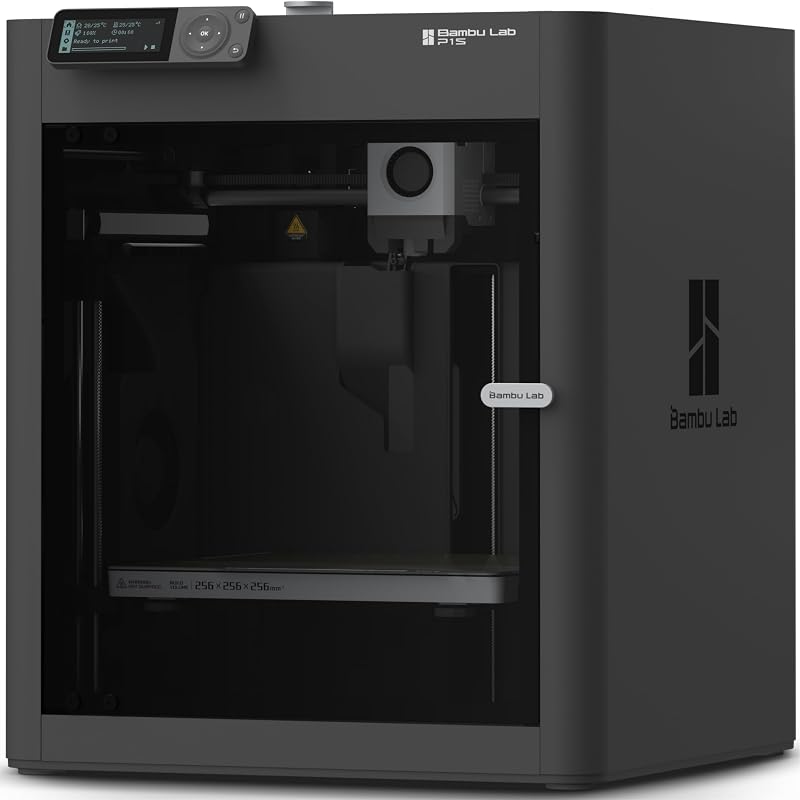
Beginner-Friendly Ecosystem with MakerWorld Model
For creators seeking an enclosed CoreXY platform without the multi-material feeder, the standalone Beginner-Friendly Ecosystem with MakerWorld Model library package delivers high-speed, ready-to-use FDM printing in a protected environment. It suits users who frequently operate in drafty workshops or shared community spaces where open, exposed hotends present safety concerns or temperature consistency challenges.
Final Verdict
Evaluating whether the machine makes sense comes down to workspace demands and travel requirements. So, is creality ender 3 v3 se worth it for the modern agile maker? Absolutely. By combining a reliable CR Touch auto-leveling system, dual Z-axis stabilization, and the proven Sprite direct extruder into a 7.12 kg chassis, Creality has eliminated the fragile setup procedures that made earlier hobby printers frustrating to transport. It provides a fast, dependable 250 mm/s fabrication platform that transitions seamlessly from a home workshop to an off-site project bench.
While it lacks an enclosure for advanced industrial filaments and does not feature multi-spool automated feeding like the higher-tier creality k2 combo multi color 3d printer bundle, it excels at its intended purpose: accessible, rapid, and repeatable printing of PLA, PETG, and TPU. For mobile creatives who value straightforward 20-minute assembly, robust mechanical guidance, and stress-free first layers, this printer is an exceptional tool to keep your projects moving wherever you set up your desk.
FAQ
What materials can the Creality Ender 3 V3 SE print?
According to the manufacturer specifications, the printer supports PLA, PETG, and flexible TPU (specifically 95A hardness). High-temperature materials requiring an enclosed chamber are not supported on this open-frame platform.
How long does the initial assembly take?
The machine arrives preassembled and requires just three simple assembly steps. Most users can complete the entire mechanical setup and reach the first test print in roughly twenty minutes from opening the box.
Does this printer require manual bed leveling with paper?
No, the system features a CR Touch probe combined with a strain sensor that automates both bed leveling and Z-offset calibration entirely. There are no manual leveling knobs under the build plate.
Can the Ender 3 V3 SE handle fast printing speeds?
Yes, the printer supports print speeds up to 250 mm/s with 2500 mm/s² acceleration, cutting build times significantly compared to standard entry-level 3D printers while maintaining print quality through its dual Z-axis and rigid steel Y-axis shafts.
What is the build volume of the Ender 3 V3 SE?
The printable area measures 8.66 x 8.66 x 9.84 inches (approximately 220 x 220 x 250 mm), offering sufficient vertical and horizontal capacity for functional parts, desktop fixtures, and artistic models.
What warranty and support does Creality include with this model?
Creality provides a 12-month after-sales service policy for the printer, with official customer support inquiries handled through Amazon within 24 hours.


