Anycubic Photon Mono M7 Pro: Is the 14K Upgrade Right for Mobile Creators?
Read from the Amazon listing on 28 Sep 2026. Figures below are the seller’s; the score is the buyers’.
As Amazon Associates, we earn from qualifying purchases. This means we may receive a small commission at no extra cost to you if you click through and make a purchase.
The Anycubic Photon Mono M7 Pro represents a major generational shift in desktop resin fabrication, targeting creators who demand high throughput alongside microscopic surface accuracy. For makers who spent years producing miniatures and mechanical prototypes on the older photon mono x 6k, this machine introduces an advanced optical engine paired with automated vat management. Our verdict: the Anycubic Photon Mono M7 Pro establishes itself as an elite production workhorse for static creative benches, though its substantial mass and tall enclosure make it less suited for creators needing a travel-friendly rig.
This automated station is tailor-made for digital sculptors, prop builders, and boutique design studios looking to minimize failed jobs through automated monitoring and active resin heating. Makers who run mobile pop-up workshops or pack lightweight fabrication gear into portable flight cases should look elsewhere, as its sheer scale and liquid containment demands require a permanent workspace.
Anycubic Photon Mono M7 Pro at a Glance

- Buyer score
- 4.0 / 5 on Amazon
- Brand
- Anycubic
- Amazon code
- B0CX1WR6ZS
Figures above are read from the Amazon product page, not measured here.
- Model Number
- BR-M7PR265
- Screen Resolution
- 14K Monochrome LCD (13312 x 5120 pixels)
- XY Resolution
- 16.8 x 24.8 μm
- Minimum Detail Diameter
- Prints holes down to 0.3 mm
- Maximum Print Speed
- 170 mm/h (0.1 mm layer thickness, high-speed resin)
- Standard Print Speed
- 130 mm/h (standard resin)
- Optical Engine
- COB LighTurbo 3.0 with Fresnel lenses and front reflectors
- Vat Management
- Dynamic temperature-controlled heating
- Fluid Handling
- Resin auto-fill and one-key recycling
- Safety Detection Suite
- 6-point intelligent sensor detection array
- Chassis Construction
- ABS, Aluminum, and Polycarbonate
- Product Dimensions
- 25 inches deep by 15 inches wide by 35 inches high
- Total Item Weight
- 15.13 kg
Resolution and Surface Detail
Listed spec Screen Resolution 14K Monochrome LCD (13312 x 5120 pixels)
The defining technical feature of the Anycubic Photon Mono M7 Pro is its 14K monochrome LCD screen, outputting a native resolution of 13312 by 5120 pixels. This optical arrangement produces an XY resolution of 16.8 by 24.8 μm, significantly reducing visible stepping across rounded geometries and shallow angles. When evaluating a potential photon mono x 6k upgrade, this resolution jump offers far more than an incremental spec bump. Micro-textures on organic sculpts, hair strands, fabric weaves, and delicate edge chamfers emerge razor-sharp without requiring aggressive anti-aliasing passes.
Precision manufacturing tasks benefit directly from the printer’s tight tolerances. According to the manufacturer specifications, the unit can resolve internal negative spaces and fluid channels down to 0.3 mm in diameter. For jewelers casting intricate filigree or engineers printing fluidic test blocks, this capability minimizes manual post-machining or hand-reaming of pinholes. Compared to standard desktop units like the elegoo mars 5 ultra, the M7 Pro targets users who need ultra-dense pixel layouts across a generous build volume without sacrificing edge clarity.
Optical consistency across the build plate relies on the specialized LighTurbo 3.0 system. Anycubic combines a chip-on-board (COB) light source with custom Fresnel lenses and front-facing reflectors to limit the light dispersion angle to within 3 degrees. This setup delivers light uniformity exceeding 90 percent across the entire LCD masking plane. In practical terms, prints positioned at the outermost corners of the platform cure with the exact same dimensional accuracy and dimensional sharpness as objects centered directly over the array.
Print Speed and Light Engine Performance
Listed spec Maximum Print Speed 170 mm/h (0.1 mm layer thickness, high-speed resin)
Throughput has historically been a bottleneck for high-resolution stereolithography, but the Anycubic Photon Mono M7 Pro attacks this limitation directly. In high-speed mode utilizing specialized high-speed resin at a 0.1 mm layer thickness, the machine achieves a blistering print speed of 170 mm/h. Even when running standard resins, the system maintains a steady baseline speed of 130 mm/h. This makes it an extraordinarily fast anycubic 14k resin printer capable of finishing production-grade prototypes in a fraction of the time required by older hardware.
A primary driver of this rapid cycle time is the integrated light-off compensation algorithm. Rather than relying on static wait times between lift strokes, the printer continuously calculates fluid relaxation dynamics. The light-off delay dynamically adjusts as each layer pulls resin back into the exposure zone, preventing layer delamination while eliminating wasted pause intervals. For commercial studios juggling tight client turnaround times, the photon mono m7 pro print speed cuts multi-hour jobs down to rapid afternoon runs.
Sustaining such rapid cycles requires rigorous thermal and optical balance. The LighTurbo 3.0 engine generates uniform UV energy while maintaining stable curing cycles layer after layer. This ensures that rapid peel forces do not rip delicate support structures away from the main model body. Creators moving from legacy units can print full-height display pieces within a single working shift without experiencing the peeling failures common to uncalibrated high-speed systems.
Vat Temperature Control and Automated Resin Handling
Listed spec Vat Management Dynamic temperature-controlled heating
Viscosity swings are the primary culprit behind print failures during cold-weather production or in mobile workshop environments. The Anycubic Photon Mono M7 Pro resolves this with a dynamic temperature-controlled resin vat that actively warms the material. By maintaining the fluid at an optimal thermal baseline throughout the entire run, the system keeps resin viscosity low and predictable. This active regulation ensures consistent curing behavior regardless of whether your studio is an air-conditioned room or an unheated garage.
Material replenishment is handled by an intelligent automated pumping system. The photon mono m7 pro auto fill system tracks vat levels and pumps fresh resin as large models consume volume, eliminating the need to pause a job and manually pour liquid from a heavy bottle. Once a print job concludes, the unit features a one-key recycling function. This mechanism pulls leftover liquid back into the storage reservoir, drastically reducing messy manual decanting and minimizing chemical spills on the workbench.
Eliminating vat refills by hand provides major ergonomic benefits for high-volume makers. In busy fabrication environments, automated handling prevents overfilling catastrophes and messy drips onto the optical window. Paired with reliable workshop power infrastructure like the anycubic p1 max setup, this automated fluid management transforms resin printing from a messy manual chore into an autonomous workstation process.
Workspace Footprint and Build Quality for Creators
Listed spec Product Dimensions 25 inches deep by 15 inches wide by 35 inches high
While the machine excels at production volume, buyers must evaluate its substantial external measurements. The unit features external dimensions of 25 inches deep, 15 inches wide, and 35 inches tall, accompanied by an overall weight of 15.13 kg. Those planning a compact resin printer for workshop tables or mobile studio travel must acknowledge that this is a large, hefty machine. Opening the protective cover demands significant vertical overhead clearance, making low-shelf installation completely impractical.
Structural rigidity is evident throughout the chassis. Built with a blend of industrial ABS, machined aluminum, and rigid polycarbonate components, the anycubic m7 pro build quality is engineered to counteract mechanical deflection during fast Z-axis lifts. The substantial aluminum vertical axis eliminates wobble during high-speed peel cycles, preserving layer registration across massive vertical assemblies. Finished in a matte black aesthetic, the housing isolates internal components from ambient UV exposure and environmental debris.
For creators seeking equipment to support on-the-road video or prop design workflows, portability remains a major trade-off. Packing a 15.13 kg machine alongside bottles of photopolymer and wash stations requires heavy-duty transport cases. While you might pack mobile production gear and field power banks like the mophie powerstation plus 2x for your cameras and laptops, the M7 Pro demands a permanent, level tabletop with dedicated electrical supply and proper workshop ventilation.
Sensors and Failure Prevention Systems
Listed spec Safety Detection Suite 6-point intelligent sensor detection array
To protect its high-resolution LCD screen and eliminate wasted consumables, the Anycubic Photon Mono M7 Pro incorporates a six-point intelligent detection suite. The system continuously evaluates mechanical and fluid variables before and during the print sequence:
- Build plate installation detection prevents the Z-axis from descending if the build surface is missing or improperly locked.
- Residue detection identifies cured debris resting inside the vat before the plate descends, preventing screen punctures.
- Resin level detection monitors material volume to trigger automatic refills before the vat runs dry.
- Failed print detection monitors mechanical resistance to catch delaminated or detached prints mid-job.
- Component connection status detection checks all optical, motor, and heating modules prior to startup.
- Release film lifespan management calculates cumulative peel cycles to notify users before the vat film degrades.
These automated safety gates are invaluable for production environments where continuous human supervision is impossible. A single cured artifact left behind from a previous print can destroy an expensive 14K LCD panel if pressed downward by the motor. By halting the motor the instant an anomaly is registered, the machine protects its internal hardware and prevents messy vat punctures.
Managing the release film lifespan through algorithmic tracking takes the guesswork out of routine maintenance. Rather than waiting for a worn film to tear and cause catastrophic vat leaks, users receive clear operational warnings. This intelligent telemetry ensures that mobile creative teams and busy designers spend their time modeling instead of diagnosing mechanical print defects.
Anycubic Photon Mono M7 Pro Pros and Cons
Pros
- Ultra-sharp 14K resolution with 16.8 micron accuracy
- Rapid print speeds up to 170 mm/h
- Dynamic temperature-controlled vat stabilizes resin viscosity
- Automated resin refilling and one-touch recycling system
- Six-point intelligent detection suite prevents machine damage
Cons
- Substantial 15.13 kg weight limits mobile portability
- Tall 35-inch vertical profile requires high clearance
- Bulky exterior footprint occupies considerable desk space
Who Should Buy the Anycubic Photon Mono M7 Pro
Buy It If
- You need pristine 14K resolution with 16.8 x 24.8 μm accuracy for ultra-fine miniatures, collectible figures, or jewelry casts.
- You require high throughput and want print speeds reaching 130 to 170 mm/h to shorten production cycles.
- Your workspace experiences fluctuating ambient temperatures that compromise resin curing, requiring active vat heating.
- You want automated resin feeding and one-touch recycling to eliminate messy manual pouring and decanting.
Skip It If
- You need a lightweight, highly mobile 3D printer that fits inside standard luggage for frequent travel.
- Your creative space lacks the vertical clearance required for a machine measuring 35 inches in total height.
- You only produce simple, low-detail utility parts that do not justify an advanced 14K optical engine.
Anycubic Photon Mono M7 Pro Alternatives Worth a Look
If the physical dimensions or resin handling requirements of the M7 Pro do not fit your production space, several capable filament-based alternatives provide strong alternatives.

MakerWorld Model Library
The MakerWorld Model Library package highlights the Bambu Lab P1S Combo, combining an enclosed CoreXY 3D printer with the AMS multi-color system and auto bed leveling. This setup is ideal for mobile creators who want multi-color functional assemblies and rugged mechanical components without dealing with liquid resin chemicals, washing stations, or UV curing tanks.

FLASHFORGE Adventurer 5M 3D Printer
Featuring a max printing speed of 600 mm/s and a 220 by 220 by 220 mm build volume, the FLASHFORGE Adventurer 5M 3D Printer utilizes an all-metal CoreXY frame and fully automatic leveling. Creators building fast physical prototypes on a budget will appreciate its 280-degree direct extruder with a rapid 3-second detachable nozzle, making it a low-maintenance workshop alternative.
Beginner-Friendly Ecosystem with MakerWorld Model
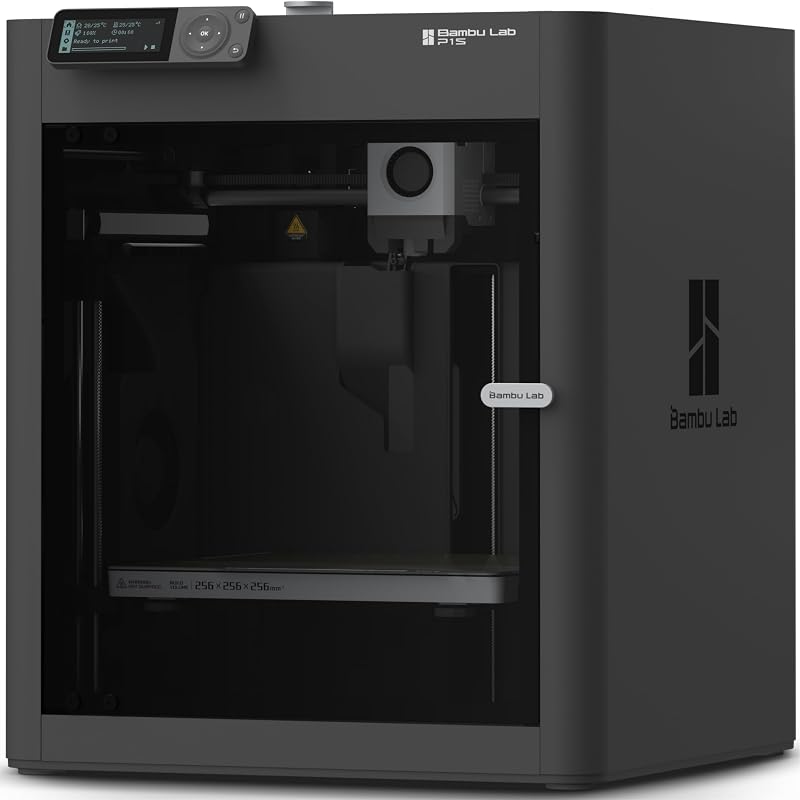
The Beginner-Friendly Ecosystem with MakerWorld Model presents the standalone enclosed Bambu Lab P1S CoreXY printer. Users who need a clean, enclosed FDM printing experience for engineering filaments like ABS without the complex multi-material accessory module should consider this machine for rapid desktop modeling.
Final Verdict
When asking is photon mono m7 pro worth it, the answer depends entirely on your need for surface resolution and workflow automation. The anycubic photon mono m7 pro specs speak for themselves: a 14K monochrome screen outputting 16.8 by 24.8 μm XY precision, paired with dynamic vat heating, automatic resin feeding, and a comprehensive 6-point sensor suite. It eliminates the tedious manual oversight that made early stereolithography printers a headache to operate.
For studios currently running the older photon mono x 6k, this machine serves as a massive functional leap forward in speed, detail, and reliability. While its 15.13 kg weight and 35-inch height demand a dedicated workshop footprint, its ability to reliably produce production-grade master prints at speeds up to 170 mm/h makes the Anycubic Photon Mono M7 Pro an indispensable powerhouse for serious creators.
FAQ
How does the Anycubic Photon Mono M7 Pro compare to the older photon mono x 6k?
The M7 Pro upgrades the screen resolution from 6K to 14K (13312 by 5120 pixels) with a superior 16.8 by 24.8 μm XY pixel size. It also adds dynamic resin vat heating, automated resin filling and recycling, and a 6-point intelligent sensor suite that the older 6K model lacked.
What print speeds can the Anycubic Photon Mono M7 Pro reach?
The printer reaches speeds up to 170 mm/h when printing at a 0.1 mm layer thickness using high-speed resin. When using standard resins, it operates at speeds up to 130 mm/h, delivering significantly faster layer completions than conventional resin machines.
How does the dynamic temperature-controlled vat improve print quality?
The dynamic temperature-controlled vat actively heats the resin to maintain an optimal working temperature throughout the print. This lowers fluid viscosity, promotes rapid resin reflow across the LCD between layers, and prevents print failures caused by cold room temperatures.
What safety features are included in the 6-point intelligent detection suite?
The intelligent suite monitors component connections, detects vat residue before homing, measures resin levels, identifies detached print failures, tracks release film lifespan, and confirms that the build plate is properly mounted before starting a job.
Is the Anycubic Photon Mono M7 Pro practical for traveling or mobile creators?
Because the unit weighs 15.13 kg and stands 35 inches tall, it is relatively bulky for travel kits. Mobile creators need a stable tabletop and proper clearance to lift the cover, making it better suited as a permanent studio production station than a portable field tool.