Entina Tina2 Plus Review: Portable Mini 3D Printing for Creators on the Move
Read from the Amazon listing on 28 Sep 2026. Figures below are the seller’s; the score is the buyers’.
As Amazon Associates, we earn from qualifying purchases. This means we may receive a small commission at no extra cost to you if you click through and make a purchase.
The Entina Tina2 Plus is a fully assembled, ultra-compact desktop fabrication tool built for rapid deployment, fast turnaround times, and minimal workspace friction. When evaluating compact fabrication hardware, creators routinely benchmark against machines like the prusa mini plus 3d printer to gauge reliability and footprint efficiency. This machine takes that small-scale concept and focuses directly on complete out-of-the-box readiness, delivering print speeds up to 250 millimeters per second, an integrated ceramic hotend, and a dual Z-axis motion system. Our editorial verdict is clear: this device offers an accessible, remarkably mobile solution for creators, educators, and field technicians who need fast prototyping without surrendering valuable workspace.
This portable mini 3d printer suits traveling makers, digital nomads, STEM educators, and hobbyists who prioritize instant deployment, lightweight packing, and reliable automated leveling over expansive print envelopes. Because it requires zero initial mechanical calibration and incorporates a flexible magnetic steel surface, bringing a mobile concept to reality on a hotel desk or classroom table is nearly effortless. Conversely, production workshops requiring high-temperature engineering plastics, active chamber heating, or large-format architectural mockups should look elsewhere, as this machine is tailored strictly for rapid, small-scale output.
Entina Tina2 Plus at a Glance

- Buyer score
- 4.0 / 5 on Amazon
- Brand
- Entina
- Amazon code
- B0GY8TDRF1
Figures above are read from the Amazon product page, not measured here.
- Dimensions
- 11.4 x 8.6 x 8.6 inches
- Item Weight
- 10.03 pounds
- Maximum Print Speed
- 250 mm/s
- Hotend Type
- 40-second fast heat ceramic hotend
- Nozzle Configuration
- Quick-swap nozzle design
- Build Surface
- PEI spring steel build plate
- Bed Leveling
- Auto-leveling system
- Z-Axis Architecture
- Dual Z-axis structure
- Connectivity and Control
- Wi-Fi, Poloprint Cloud app, TF card, laptop connection
- Operating System Compatibility
- Windows, macOS, Linux
Portability and Workspace Footprint for Mobile Work
Listed spec Dimensions 11.4 x 8.6 x 8.6 inches
For creators who frequently shift locations between temporary offices, maker events, or home workspaces, physical volume and carry weight determine whether a tool is practical or prohibitive. The Entina Tina2 Plus features exterior dimensions of 11.4 inches deep by 8.6 inches wide by 8.6 inches high, resulting in an exceptionally small footprint 3d printer that occupies less table area than an open laptop. At an item weight of 10.03 pounds, it is lightweight enough to stow inside a padded equipment duffel or a vehicle trunk without dominating luggage space.
The chassis is constructed from molded blue plastic featuring a partially enclosed frame structure. This partially shielded enclosure physically separates hot running components and moving mechanical assemblies from accidental bumps, which proves critical when working in confined temporary spaces or around children in classroom settings. When evaluating the Entina Tina2 Plus for travel, the absence of protruding gantry towers or fragile external sensor brackets makes packing significantly less nerve-racking than transporting traditional open-frame machines. While the listing does not specify the exact build volume dimensions, the compact exterior ensures that the total cubic volume required on your desk remains negligible.
Unlike larger desktop units such as the bamboo labs a1 mini, which require clearance for extensive external spools and sweeping gantry movement, this design keeps its moving parts consolidated within its compact framework. For mobile digital fabrication units where desk real estate is at a premium, the physical footprint allows you to keep an active manufacturing tool running right beside your laptop without creating workspace clutter.
Print Speed and Ceramic Hotend Performance
Listed spec Maximum Print Speed 250 mm/s
Speed is essential when testing hardware iterations in mobile environments, where waiting half a day for a single concept bracket stalls an entire project. This unit achieves maximum print speeds up to 250 millimeters per second, powered by a stable motion system and dedicated cooling setup. Paired with its motion assembly is a dual Z-axis structure, which prevents gantry sag and dampens mechanical vibration during high-speed directional changes, maintaining dimensional fidelity even during rapid infill passes.
Thermal readiness is handled by a high-efficiency ceramic hotend engineered to reach operational temperature in 40 seconds. Traditional brass-block heating assemblies can require multiple minutes to reach stable extrusion conditions, but this ceramic core minimizes start-up lag so projects launch almost immediately after sending the file. Additionally, the unit incorporates a quick-swap nozzle mechanism that simplifies routine maintenance or nozzle replacements without requiring teardowns of the entire print head assembly.
Examining the core Entina Tina2 Plus specs reveals an extrusion and cooling balance optimized for rapid, reliable output on everyday DIY models, school demonstrations, and functional parts. While high-speed printing typically introduces artifacts on lightweight machines, the dual Z-axis stability ensures layer consistency across simple geometries and rapid turnaround prototypes.
Bed Leveling Precision and Build Surface Adhesion
Listed spec Build Surface PEI spring steel build plate
First-layer adhesion is frequently the failure point for desktop manufacturing, especially on machines that endure road vibrations during transit. The Entina Tina2 Plus addresses this through a compact 3d printer auto leveling routine that calculates bed variance automatically. Because the unit arrives fully assembled and ready to use straight from the box, operators are spared the tedious manual paper-sliding calibration rituals typical of traditional budget printers.
Complementing the leveling matrix is a PEI spring steel build plate. PEI provides dependable thermal adhesion during the active print cycle while allowing effortless part removal once the build finishes. Rather than scraping parts off with metal spatulas that risk bending delicate components or gouging the print bed, the user simply lifts the magnetic spring steel sheet and flexes it gently to pop the finished print free.
For creators accustomed to high-detail desktop manufacturing tools like the monoprice mp mini deluxe sla resin printer, the mechanical simplicity of a flexible PEI sheet on an FDM platform provides a dramatically cleaner, chemical-free workflow that requires zero post-print chemical washes or curing stations on the road.
Software Integration and Wireless Cloud Workflow
Listed spec Connectivity and Control Wi-Fi, Poloprint Cloud app, TF card, laptop connection
A mobile fabrication setup should never rely on cumbersome cabling or complex slicing configurations just to run a quick test part. The Entina Tina2 Plus features integrated Wi-Fi and connects natively to the Poloprint Cloud mobile application, giving users access to over 1,500 pre-configured printable STEM models. This enables full remote control and mobile slicing directly from a smartphone or tablet, cutting down on peripheral equipment required during travel.
For users who prefer standard computer-driven workflows, the printer offers broad operating system support covering Windows, macOS, and Linux platforms, with direct laptop connectivity. It also ships with an included TF memory card preloaded with test models, allowing users to initiate test prints entirely offline without establishing a wireless network connection. This offline redundancy proves valuable in hotel environments or conference centers where captive Wi-Fi portals block local device pairing.
When considering educational environments or beginner makers, this combination of app-based model libraries and cross-platform laptop compatibility lowers the technical barrier to entry. Beginners can explore digital models in a streamlined interface, while experienced users retain the flexibility to generate their own custom sliced toolpaths using their operating system of choice, making it a viable companion for creative classrooms and portable workstations alike.
Entina Tina2 Plus Pros and Cons
Pros
- Fully assembled and ready out of the box
- Ceramic hotend reaches temperature in 40 seconds
- Fast print speeds up to 250 mm/s
- Dual Z-axis structure improves mechanical stability
- Auto-leveling with flexible PEI spring steel plate
- Lightweight 10.03-pound compact footprint
Cons
- Listing does not specify exact build volume
- Partially enclosed frame rather than fully sealed chamber
- Compact chassis limits maximum model scale
Who Should Buy the Entina Tina2 Plus
Buy It If
- You need an ultra-compact fabrication machine weighing just 10.03 pounds that packs easily into temporary workspaces.
- You want a completely assembled out-of-the-box machine featuring auto-leveling and a flexible PEI spring steel plate without manual calibration.
- You prioritize rapid project turnaround with a 40-second ceramic hotend heating cycle and print speeds up to 250 mm/s.
- You value flexible control through a mobile app and Wi-Fi alongside standard laptop compatibility on Windows, macOS, and Linux.
Skip It If
- You require a large-format build volume for oversized components, as this small-chassis frame is engineered exclusively for compact objects.
- You plan to print advanced composite filaments requiring an all-metal enclosed heated chamber rather than a partially enclosed plastic structure.
- You need native multi-color filament feeding systems integrated directly into your printing platform.
Entina Tina2 Plus Alternatives Worth a Look
While this compact machine serves mobile makers exceptionally well, different creative applications demand larger envelopes, all-metal structures, or multi-filament handling. Here is how three prominent market alternatives compare against the main product.

MakerWorld Model Library
The MakerWorld Model Library package features the Bambu Lab P1S Combo with an AMS unit, delivering CoreXY high-speed precision and automated multi-color material feeding. Users who want intricate multi-shade artistic prints and an enclosed system rather than an ultra-lightweight travel printer will find this ecosystem significantly more capable for studio work.

FLASHFORGE Adventurer 5M 3D Printer
The FLASHFORGE Adventurer 5M 3D Printer is built around a CoreXY all-metal structure offering a 220x220x220mm print size, max speeds up to 600 mm/s, and a 280°C direct extruder with a 3-second quick-detach nozzle. Choose this unit if your work requires significantly larger print volume, higher nozzle temperatures, and faster peak speeds, accepting that its larger metal frame is far less portable.
Beginner-Friendly Ecosystem with MakerWorld Model
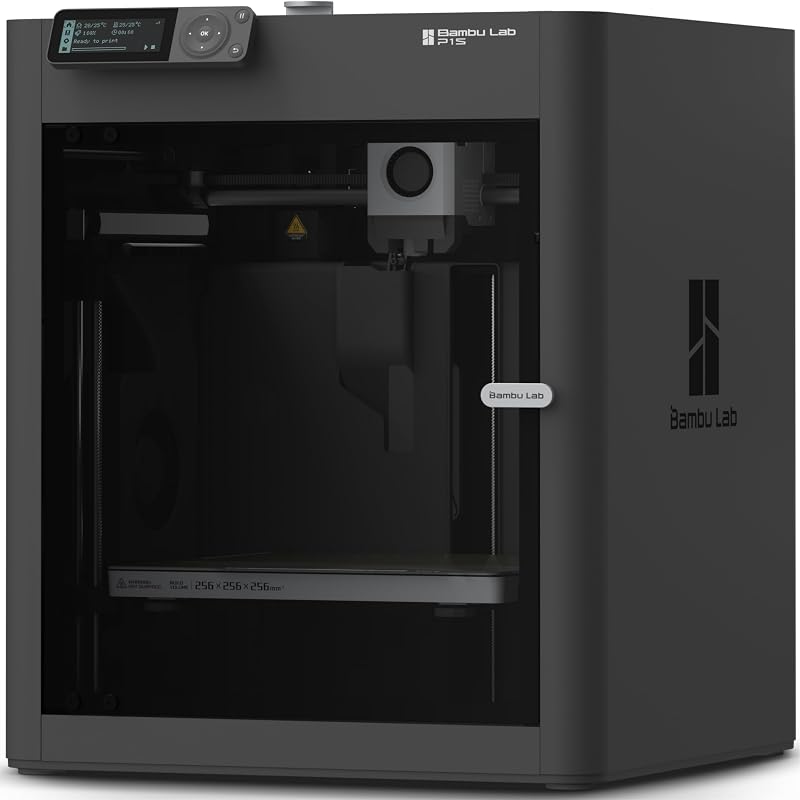
The standalone Beginner-Friendly Ecosystem with MakerWorld Model setup delivers the enclosed CoreXY Bambu Lab P1S architecture without the multi-material AMS unit. It is an ideal alternative for makers who require enclosed temperature stability for demanding filaments in a permanent home workshop, though it lacks the grab-and-go portability of an under-eleven-pound mini machine like the Entina or the classroom-oriented aoseed xmaker joy.
Final Verdict
Is Entina Tina2 Plus worth it for mobile creators and compact workshops? For users whose primary criteria revolve around fast setup, small physical footprints, and automated leveling, the answer is a resounding yes. It eliminates the traditional assembly headaches, bed leveling frustrations, and sluggish thermal ramp-ups that once defined budget FDM hardware. By packing a ceramic hotend, dual Z-axis stabilization, and wireless app control into an enclosure under 11.5 inches deep, it fulfills the promise of accessible on-the-go desktop fabrication.
Naturally, the physical constraints that make it an exceptional travel companion also establish its functional boundaries. You will not produce full-scale helmets or industrial-grade enclosures on this machine, and the listing does not specify the exact build volume dimensions for those planning millimeter-precise project fits. However, if your daily fabrication needs involve rapid prototyping, STEM education, small household repairs, and hobby models, this Entina Tina2 Plus review highlights a capable, convenient mini machine that deploys anywhere you find an open flat surface.
FAQ
Does the Entina Tina2 Plus require assembly before use?
No assembly is required. The printer arrives fully assembled in the box with a preloaded TF card and test models, allowing users to start printing almost immediately without mechanical assembly or manual bed leveling routines.
How fast does the ceramic hotend heat up?
The high-efficiency ceramic hotend reaches printing temperature in approximately 40 seconds, significantly reducing preheat waiting times compared to standard heating blocks.
What operating systems are compatible with this printer?
The machine supports computer connections via laptop across Windows, macOS, and Linux operating systems, in addition to mobile control through the Poloprint Cloud app on Wi-Fi.
Does the printer feature automatic bed leveling?
Yes, the printer incorporates an automated leveling system that compensates for surface irregularities, working together with a flexible PEI spring steel build plate to ensure reliable first-layer adhesion.
Is the Entina Tina2 Plus practical for travel and mobile work?
Weighing 10.03 pounds with exterior measurements of 11.4 by 8.6 by 8.6 inches, the printer is exceptionally compact and easy to carry between temporary work environments, classrooms, and hotel desks.