Creality Ender-3 V3 KE Review: Practical Speed for Small Workspaces
Read from the Amazon listing on 22 Sep 2026. Figures below are the seller’s; the score is the buyers’.
As Amazon Associates, we earn from qualifying purchases. This means we may receive a small commission at no extra cost to you if you click through and make a purchase.
The Creality Ender-3 V3 KE represents a substantial modernization of the classic open-bed platform, engineered to bring accelerated production rates and high-temperature capability to compact benches. Delivering velocity figures up to 500 mm/s alongside an all-metal hotend assembly, it provides rapid physical prototyping without the sprawling physical demands of commercial industrial equipment. For any maker conducting an ender 3 ke review to weigh sheer speed against footprint constraints, the machine proves itself as a capable, streamlined fabrication tool that minimizes idle bench time.
This compact 3D printer serves makers, travel-ready creators, and workshop hobbyists who operate out of shared spaces, apartments, or temporary workspaces where tabletop real estate is at a premium. Users needing fast turnaround on mechanical parts, architectural brackets, or quick functional prototypes will appreciate the rapid acceleration and automatic calibration routines. However, commercial operators needing large multi-spool automation or those who regularly print massive industrial ABS assemblies without draft protection should look toward larger enclosed systems instead.
Creality Ender-3 V3 KE at a Glance

- Buyer score
- 4.8 / 5 on Amazon
- Brand
- Creality
- Amazon code
- B0F7RDSWFK
Figures above are read from the Amazon product page, not measured here.
- Maximum Print Speed
- Up to 500 mm/s
- Peak Acceleration
- 8000 mm/s²
- Build Volume
- 220 x 220 x 250 mm
- Extruder
- Sprite Direct Extruder
- Hotend Max Temperature
- 300℃ (60W ceramic heater, bi-metal heatbreak, copper nozzle)
- Bed Leveling
- CR Touch sensor automatic multi-point calibration
- Motion Hardware
- X-axis carriage slide containing ball bearings
- Supported Filaments
- PLA, PETG, ABS, TPU (95A), ASA
- Frame Construction
- Aluminum
- Physical Dimensions
- 17.04"D x 14.41"W x 19.29"H
Kinematics, Motion Stability, and Acceleration
Listed spec Peak Acceleration 8000 mm/s²
Velocity is the headline attribute of modern additive manufacturing, and the Ender-3 V3 KE kinematics leverage an aggressive 8000 mm/s² acceleration curve to hit maximum traversal quickly. Achieving a high ender 3 ke print speed requires more than simply pushing stepper motors faster; mechanical rigidity dictates whether finished parts retain clean dimensional accuracy or suffer from heavy ringing. The machine addresses vibration by integrating an upgraded X-axis carriage slide containing ball bearings, eliminating the slop often found in traditional rubber v-slot wheels.
Creality integrates smart vibration mitigation algorithms that run in tandem with dual model cooling fans to preserve corner sharpness at high feeds. By actively counteracting the resonance generated when the toolhead darts across the bed, the motion controller dampens surface ghosting across straight walls. This engineering combination maintains a rated 0.1 mm printing accuracy, ensuring that rapid iteration does not force a compromise on geometric tolerances when fitting interlocking joints or threaded components together.
Effective cooling becomes paramount once layer times drop into single-digit seconds. The dual fan array directs targeted airflow beneath the nozzle block, congealing fresh plastic bridges before gravity pulls them out of true alignment. This mechanical cooling balance enables the open frame to sustain high feeds on basic geometries while protecting fine overhangs and detailed perimeter profiles from thermal sagging during sustained high-output production.
Sprite Direct Extruder and Thermal Versatility
Listed spec Extruder Sprite Direct Extruder
A primary bottleneck on entry-level hardware has traditionally been the hotend feed mechanism, but the ender 3 ke sprite direct extruder circumvents filament dragging issues by seating the drive gears directly above the melt zone. Powered by a 60W ceramic heating core, a bi-metal heatbreak, and a copper nozzle, the thermal block reaches operating temperatures up to 300℃. This thermal envelope expands ender 3 ke filament compatibility well beyond entry-grade plastics to encompass PLA, PETG, ABS, TPU (95A), and ASA.
For builders who previously relied on earlier platforms such as the Creality Ender 3 V3 SE 3D, the jump to a 300℃ hotend unlocks practical mechanical applications requiring weather-resistant polymers like ASA or high-durability TPU gaskets. The direct drive gears exert consistent grip close to the melt zone, preventing flexible filaments like 95A TPU from kinking or buckling inside Bowden guide tubes. The shortened filament path also translates to snappy retraction distances, eliminating wispy stringing on multi-part batch layouts.
Handling engineering plastics like ABS and ASA on an open-frame machine does present real thermal realities. While the hotend reaches 300℃ effortlessly, the absence of an ambient chamber enclosure means large-footprint ABS parts remain vulnerable to edge lifting if cross-room drafts sweep through the workspace. Small functional brackets and dense mechanical fittings print reliably, but users pursuing massive ASA components will need to minimize external airflow around their print station.
Automated Calibration and First-Layer Reliability
Bed leveling has historically been the primary obstacle for entry-level 3D printer operators, demanding continuous manual thumbwheel adjustments to avoid failed starts. The ender 3 ke auto leveling architecture replaces manual leveling entirely with an integrated CR Touch sensor that probes multiple points across the platform. By recording minute height variations across the build surface, the system generates an internal mesh map that compensates dynamically during the crucial initial print layer.
Operating the machine is handled through an intuitive touch UI screen featuring real-time model preview rendering. Being able to visually verify the loaded G-code file directly on the console reduces human error when swapping between similar prototype iterations. The interface also coordinates continuous sensor feedback, pausing movement automatically if the filament detection switch runs out of spool material or if external power drops out mid-job.
The power outage recovery routine safeguards longer builds from unexpected electrical blips, picking up coordinates accurately once electricity is restored. Combined with automated initial z-offset calibration, the platform minimizes the tedious preparation rituals that previously made rapid desktop 3D printing a high-maintenance chore, ensuring that the printer can be left to execute jobs with high operational confidence.
Footprint, Assembly, and Small Workspace Integration
Listed spec Physical Dimensions 17.04"D x 14.41"W x 19.29"H
Desktop real estate dictates workshop utility, and the ender 3 ke for small spaces represents an exceptionally balanced compromise between build capacity and exterior dimensions. Measuring 17.04 inches deep, 14.41 inches wide, and 19.29 inches high, the chassis fits comfortably on secondary workbenches, storage utility carts, or compact mobile maker stations without encroaching on drafting tables or computer monitors.
Workspace efficiency is reinforced by the creality ender 3 v3 ke setup process, designed around an upgraded all-in-one modular assembly that takes roughly 10 minutes from unboxing to initial power-on. Fastening the gantry to the base requires minimal mechanical experience, allowing users to establish an operational production point in temporary project offices or field locations with minimal tool overhead. Communication links interface smoothly with a personal computer for local slicing and continuous workflow deployment.
When organizing a multi-tool digital fabrication workshop alongside other hardware like the ELEGOO Mercury Plus v3.0 wash and cure station, maintaining clear boundaries between dry filament fabrication and wet processing zones is critical. The modest 220 x 220 x 250 mm volume leaves ample perimeter space on standard utility tables for organizing filament spools, calipers, and finished parts without creating an overcrowded or hazardous desktop environment.
Creality Ender-3 V3 KE Pros and Cons
Pros
- Up to 500 mm/s high-speed printing
- 300°C Sprite direct drive extruder
- CR Touch automated multi-point leveling
- X-axis carriage with ball bearings
- Swift 10-minute all-in-one installation
Cons
- Open frame lacks ambient chamber heat
- No multi-color automatic filament feeder
- Modest 220x220x250 mm print volume
Who Should Buy the Creality Ender-3 V3 KE
Buy It If
- You need up to 500 mm/s print speeds to quickly iterate functional mechanical parts on a compact bench.
- You plan to print flexible TPU or technical filaments like PETG and ASA using a 300℃ direct-drive hotend.
- You want a streamlined 10-minute setup experience backed by automated CR Touch mesh leveling.
- Your production workspace requires a space-efficient footprint that easily mounts to small utility desks.
Skip It If
- You need a fully enclosed build volume straight from the box for massive, warp-prone ABS structural prints.
- You require a native multi-color, multi-material auto-switching spool ecosystem.
- Your fabrication projects regularly exceed the standard 220 x 220 x 250 mm build volume boundaries.
Creality Ender-3 V3 KE Alternatives Worth a Look
While the Ender-3 V3 KE provides a potent blend of speed and direct-drive capability, differing production demands or structural requirements may make another platform a better match for your specific desktop fabrication setup.

MakerWorld Model Library
The MakerWorld Model Library package highlights the multi-color 3D printing capabilities of the CoreXY Bambu Lab P1S Combo paired with an AMS feeder. Buyers who prioritize multi-spool automated color switching and an enclosed CoreXY kinematic chassis over an open-bed design should consider this alternative system.

FLASHFORGE Adventurer 5M 3D Printer
Reaching a top speed of 600 mm/s with an all-metal CoreXY frame, the FLASHFORGE Adventurer 5M 3D Printer features a 280°C direct extruder with a 3-second detachable nozzle and a 220x220x220 mm build volume. It serves shoppers who desire CoreXY travel mechanics and rapid hot-swappable nozzle hardware instead of a traditional moving-bed structure.
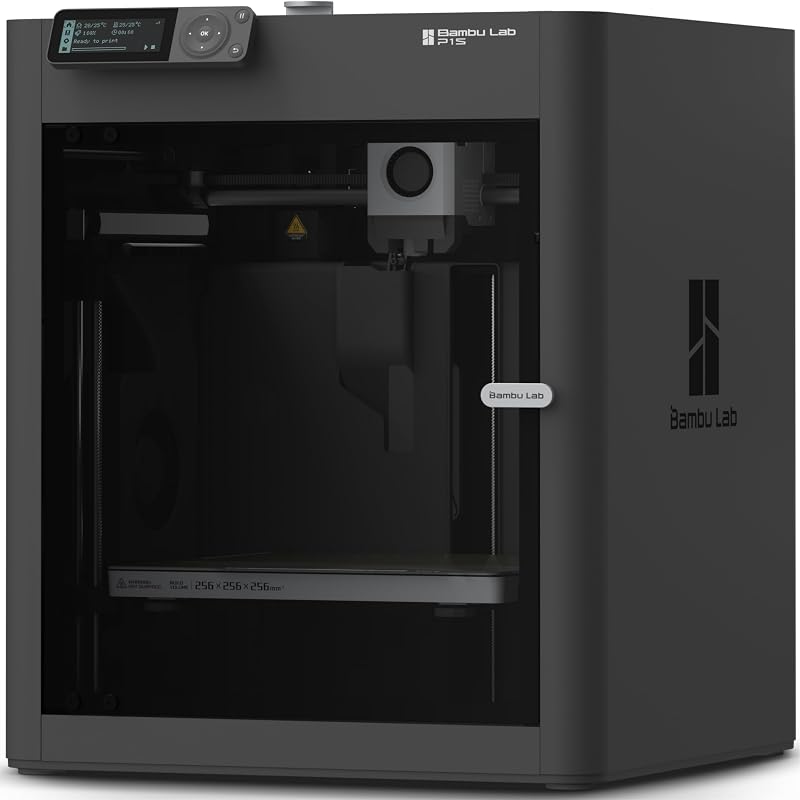
Beginner-Friendly Ecosystem with MakerWorld Model
The Beginner-Friendly Ecosystem with MakerWorld Model presents an enclosed CoreXY setup centered around the Bambu Lab P1S 3D Printer. This ready-to-use FDM solution caters directly to creators who want out-of-the-box chamber heat retention for technical plastics without assembling external enclosures around an open gantry.
Final Verdict
Determining whether the Creality Ender-3 V3 KE meets your production expectations comes down to workspace priorities and throughput demands. By uniting a 500 mm/s motion system with an upgraded X-axis linear bearing rail, CR Touch automated leveling, and a 300℃ Sprite direct extruder, Creality has addressed the mechanical pain points of earlier bed-slingers. The machine consistently produces dimensionally accurate prints without consuming excessive desktop space or requiring constant manual tune-ups.
When asking if the ender 3 ke is worth it, makers looking for an affordable, high-speed open-bed platform that handles everything from flexible TPU to standard PLA will find exceptional utility here. Provided you do not require an active heated enclosure or native multi-filament automation, the Ender-3 V3 KE delivers high-velocity fabrication within an accessible, compact form factor.
FAQ
Is the Creality Ender-3 V3 KE worth it for high-temperature filaments?
Yes, the included 300℃ hotend with a 60W ceramic heater, bi-metal heatbreak, and copper nozzle effortlessly reaches the required melting temperatures for materials like ASA, ABS, and high-temp PETG. However, because the printer features an open frame, larger ABS and ASA components may experience edge warping if operated in cold, drafty rooms.
How fast does the Creality Ender-3 V3 KE print?
The printer supports maximum travel and print speeds of up to 500 mm/s with an acceleration ceiling of 8000 mm/s². Actual print times will vary depending on your slicer settings, layer height, and the flow characteristics of the filament loaded into the machine.
What filaments work with the Creality Ender-3 V3 KE?
According to the official specifications, the printer supports PLA, PETG, ABS, TPU (95A), and ASA. The Sprite direct-drive system is particularly well-suited for controlling flexible filaments like TPU without jamming or buckling along the feed path.
How long does the Creality Ender-3 V3 KE setup take?
Assembly is streamlined by an all-in-one design that typically takes about 10 minutes to bolt together and wire. The base and gantry mount quickly, allowing users to move from the initial unboxing to running automated bed calibration in very little time.
Does the Creality Ender-3 V3 KE have auto bed leveling?
Yes, the machine comes equipped with a CR Touch sensor that automates bed leveling. It probes multiple points across the print surface to calculate a real-time compensation mesh, removing the need for manual bed leveling wheels.
What are the exact Creality Ender-3 V3 KE specs for machine size?
The exterior frame measures 17.04 inches deep, 14.41 inches wide, and 19.29 inches high, built with aluminum frame components. It accommodates a standard build volume of 220 x 220 x 250 mm for printing physical models.


